





🇹🇭 eSIM for Thailand

As low as $1.05/day*
Excellent ★★★★★ Based on 2,400+ reviews
  • Unlimited data
  • 7-day validity
  • Fast and reliable internet
  • No more roaming charges
  • Instant QR code by email
Start enjoying unlimited data
Number of days
More days, lower the price!
7
Number of eSIMs
More eSIMs, more discounts
1
Install your eSIM before or during your trip. Your plan will begin once you arrive at your destination and turn on your eSIM.

* As low as price reflects the cheapest per-day rate, based on the longest available unlimited data plan duration.

Secure Payment
Visa Mastercard PayPal Amex Diners JCB
Thailand eSIM travel illustration

Why choose us?

See how uPhone compares with other options in Thailand.

uPhone
Local SIM
Roaming
Unlimited data plans
Instant activation
Keep your existing number
No hidden fees
No contract
24/7 support
Southeast Asia eSIM

Travel the Region with Southeast Asia eSIM

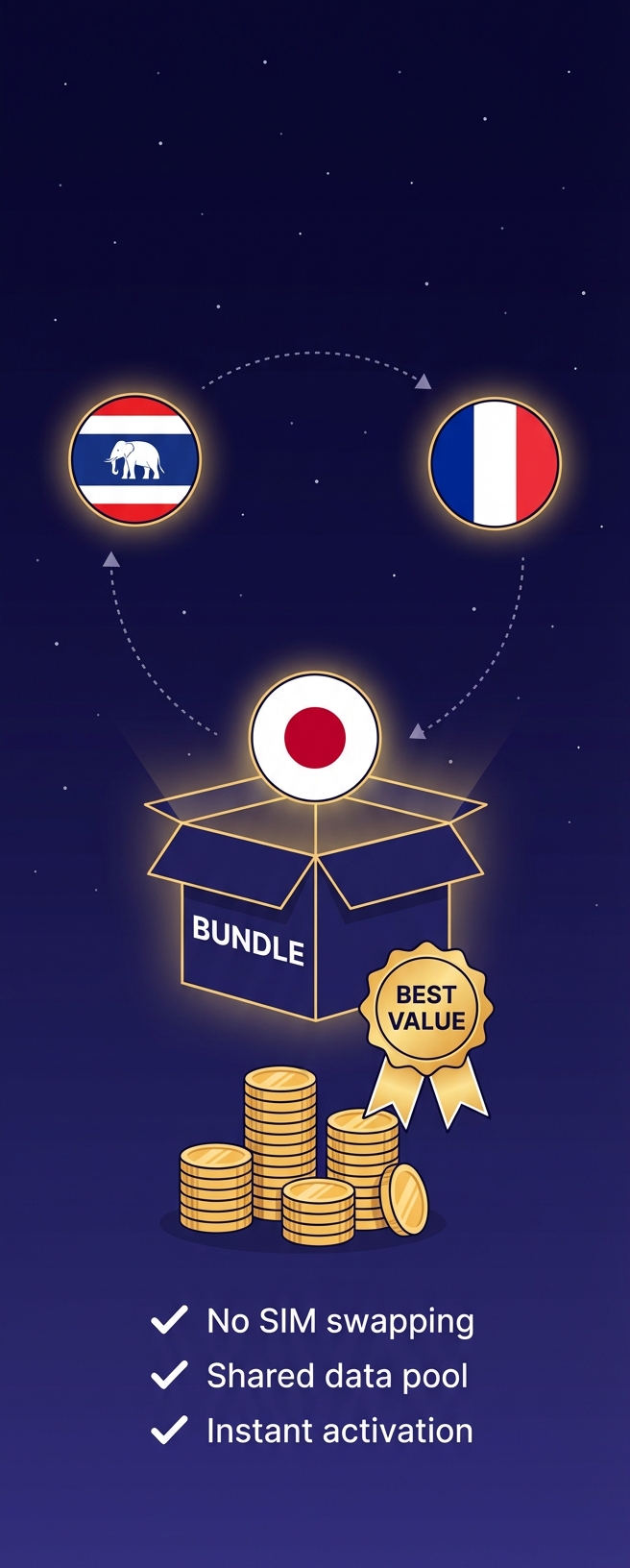
Cover Thailand and all nearby countries on one regional eSIM — no SIM swapping, no extra fees. Plans from $0.76.

View Southeast Asia Plans
Internet restrictions illustration
Minor Restrictions

Internet Access in Thailand

Thailand blocks adult content, gambling sites, and content deemed critical of the monarchy. Social media and messaging apps are freely accessible.

Adult Content Political Content Gambling

Affected services: Adult content, gambling sites, content critical of the monarchy

🇹🇭

eSIM prices for Thailand

All prices in USD

7 days of unlimited data in Thailand costs $14.24 — about $2.03 a day on AIS, TrueMove H or dtac, with no roaming charge and no SIM to swap. In Thailand, 5G is live and median mobile download speed is 41.3 Mbps.

Duration Price Per day
1 day $6.06 $6.06/day
3 days $14.78 $4.93/day
5 days $23.78 $4.76/day
7 days $14.24 $2.03/day
10 days $43.42 $4.34/day
15 days $22.49 $1.50/day
30 days $31.48 $1.05/day
180 days $64.00 $0.36/day
🇹🇭

Which Thailand eSIM plan fits your trip?

Choose your Thailand eSIM by matching the allowance and validity period to your trip, then compare the selected product details with the local network, band and speed references already shown on this page.

Start with the length of your stay, then allow for navigation, messaging, streaming and work use. Each option below is a plan size that is currently available for this destination.

Short trip

1 GB / 7 days

Best for: A short visit with maps, messages and occasional browsing.

This option pairs the 1 GB allowance with a stated validity period of 7 days.

Usage tip: Save maps before longer journeys and use Wi-Fi for large downloads.

Two-week trip

3 GB / 15 days

Best for: A stay of around two weeks with regular navigation and messaging.

The 3 GB allowance remains available across a stated validity period of 15 days.

Usage tip: Keep automatic app updates and cloud backups on Wi-Fi.

Longer or higher use

10 GB or more / 30 days

Best for: A longer stay or more frequent streaming, video calls or work use.

The 10 GB or more / 30 days profile provides a larger data pool than the short-trip options on this page.

Usage tip: Compare the allowance with your normal phone usage and monitor it during the trip.

🇹🇭

Which networks you connect to in Thailand

Your eSIM roams onto Thailand's own operators. These are the networks and the frequencies they run — check your phone supports them before you travel.

Operator 4G / LTE bands 5G bands 5G
AIS B1, B3, B8, B40 n28, n41, n258 Yes
TrueMove H B1, B3, B8, B40 n28, n41, n258 Yes
dtac B1, B3, B8, B40 n28, n41 Yes
41.3 Mbps
Median download
12.5 Mbps
Median upload

Source: Ookla Speedtest Global Index, Q2 2025

Coverage in Thailand

n258 (26 GHz mmWave) deployment is limited to dense urban areas and select venues; B40 (2300 MHz) is widely used for LTE but absent from many international phone models.

How to check mobile coverage in Thailand

The Thailand mobile network source is linked below as a public network reference. Check the places on your itinerary where the source offers local detail, then confirm the network information for the selected eSIM product. The operator table on this page provides the country-level reference, while the selected product details identify which network information applies to your plan.

Accommodation and daily stops

Check your accommodation and the places you expect to visit in Thailand. Indoor reception can differ from an outdoor map, so keep the property Wi-Fi details available as well.

Journeys between stops

Review the full route rather than checking only the arrival city. Save tickets, addresses and maps offline before longer road or rail journeys.

Borders and onward travel

Check the selected product scope for every country on your itinerary. Your Thailand plan and a regional plan may have different included destinations and validity periods.

Phone compatibility in Thailand

Compare your phone with 4G bands B1, B3, B8, B40 and 5G bands n28, n41, n258 in the existing Thailand network table. Support for more of the listed bands gives the phone more options when connecting, while the selected product, location and local network conditions determine the service available.

Set up the Thailand eSIM for your trip

Keep the QR code and installation instructions available offline, and complete each step according to the selected product's instructions.

When validity starts: Validity-start rules can differ by product. Check the selected plan details before installation and travel.

  1. Confirm that your phone is unlocked and supports eSIM before purchase.
  2. Save the QR code or manual installation details somewhere you can reach without mobile data.
  3. Use reliable Wi-Fi to install the profile at the time recommended in the product instructions.
  4. When you are ready to use it, select the travel eSIM for cellular data and apply the stated roaming and APN settings.
  5. Keep roaming disabled on your home line if you want to avoid using its travel data.
Network and coverage sources, checked 2026-10-10
First-Time Thailand: Bangkok & Chiang Mai in Seven Days podcast cover
🎧 Listen to the Thailand travel podcast

First-Time Thailand: Bangkok & Chiang Mai in Seven Days

This guide helps first-time visitors explore Thailand through a calm, seven-day route that pairs Bangkok’s energy with Chiang Mai’s slower pace. You will learn when to go, how to move between cities, what to eat, and how to pack, all while avoiding common travel mistakes.

Episode, itinerary and transcript 10:54 · Full transcript included
Thailand travel guide

Enjoy your Thailand vacation

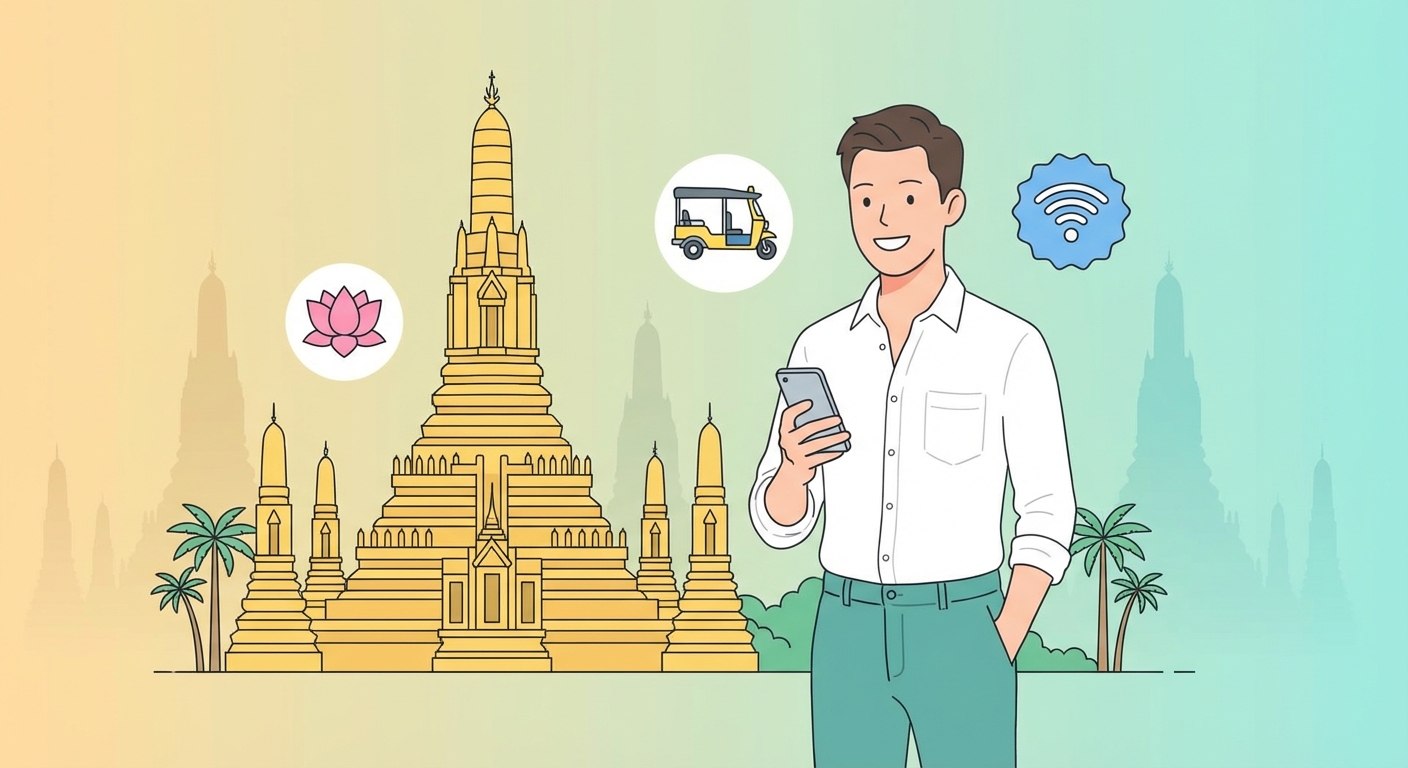
Thailand is Southeast Asia's enduring favourite — a country of gilded temples, tropical islands, fiery street food and legendary hospitality that has captivated travellers for decades. Bangkok pulses with tuk-tuks, rooftop bars and floating markets; Chiang Mai moves at a gentler pace among misty mountains and elephant sanctuaries; and the southern islands — Koh Samui, Koh Lanta, the Phi Phi archipelago — offer some of the most beautiful beaches in the world. Thailand manages to be all things at once: budget-friendly or ultra-luxurious, party-ready or profoundly peaceful. With a uPhone eSIM you'll have reliable data from the moment you clear customs, keeping maps, Grab taxi and Google Translate running throughout your trip.

Top attractions in Thailand

From Bangkok's grand palace complex to the turquoise coves of the Andaman Sea, Thailand packs world-class attractions into every corner of the country. Here are the highlights worth planning your itinerary around.

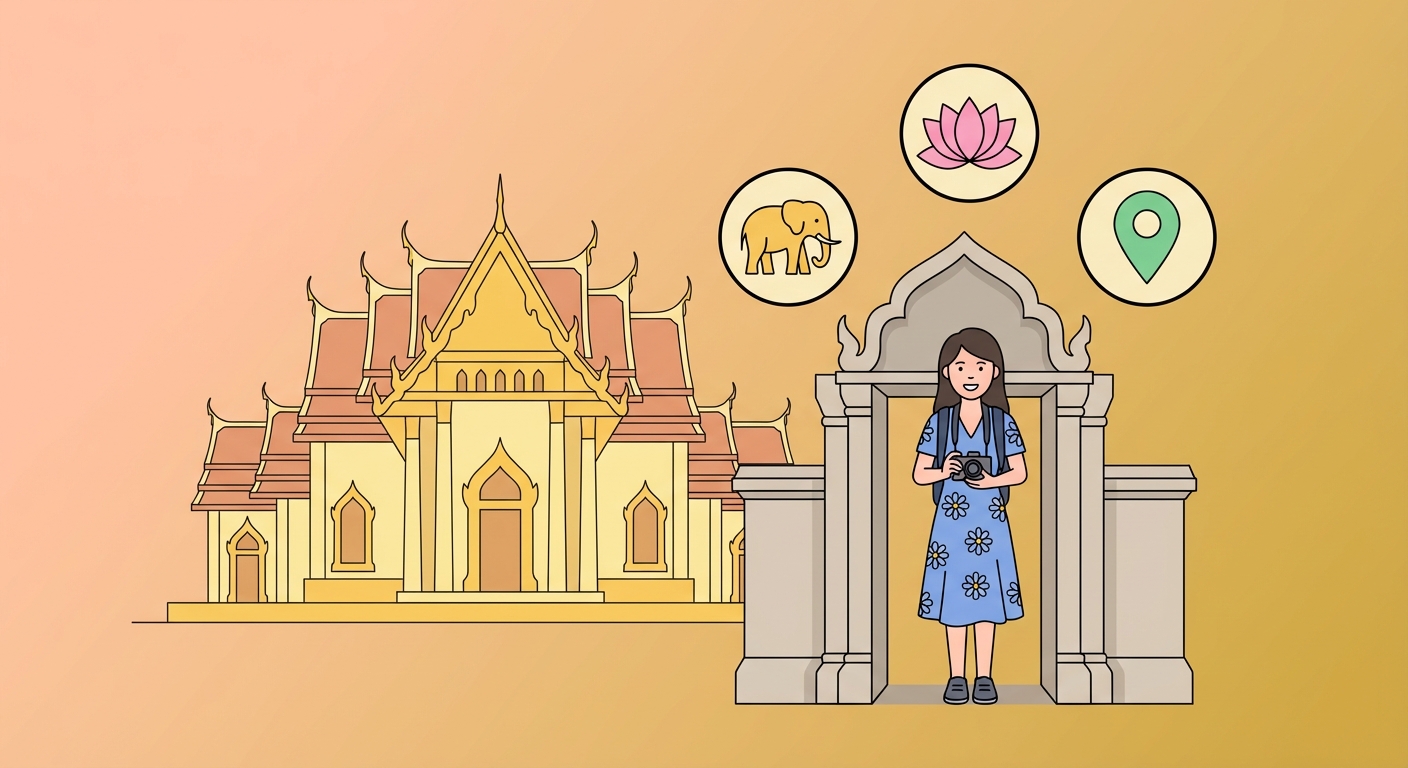
  • Grand Palace & Wat Phra Kaew, Bangkok — The spiritual and historical heart of Thailand. The Emerald Buddha temple inside the palace complex is one of Southeast Asia's most revered sites.
  • Wat Arun, Bangkok — The Temple of Dawn rises from the Chao Phraya riverbank in an intricate mosaic of porcelain and seashells. Most dramatic at sunrise and after dark when illuminated.
  • Chiang Mai Old City & Doi Suthep — The walled old city is dotted with 300 temples; the mountain temple of Doi Suthep overlooks the whole city from the forested hillside.
  • Railay Beach, Krabi — Only accessible by longtail boat, this limestone-cliffed peninsula has some of Thailand's most dramatic beach scenery and world-class rock climbing.
  • Ayutthaya Historical Park — A UNESCO World Heritage site of crumbling prang towers and headless Buddha statues — the ruins of Thailand's ancient capital, just 90 minutes from Bangkok.
  • Elephant Nature Park, Chiang Mai — Ethical elephant sanctuary where rescued elephants roam freely. One of the best wildlife experiences in all of Southeast Asia.

Popular foods to try in Thailand

Thai food is one of the world's great cuisines — a masterful balancing act of sweet, sour, salty, spicy and umami that varies dramatically by region. Bangkok's street stalls, Chiang Mai's khantoke dinners and the seafood grills of the southern islands all deliver extraordinary flavour at low cost.

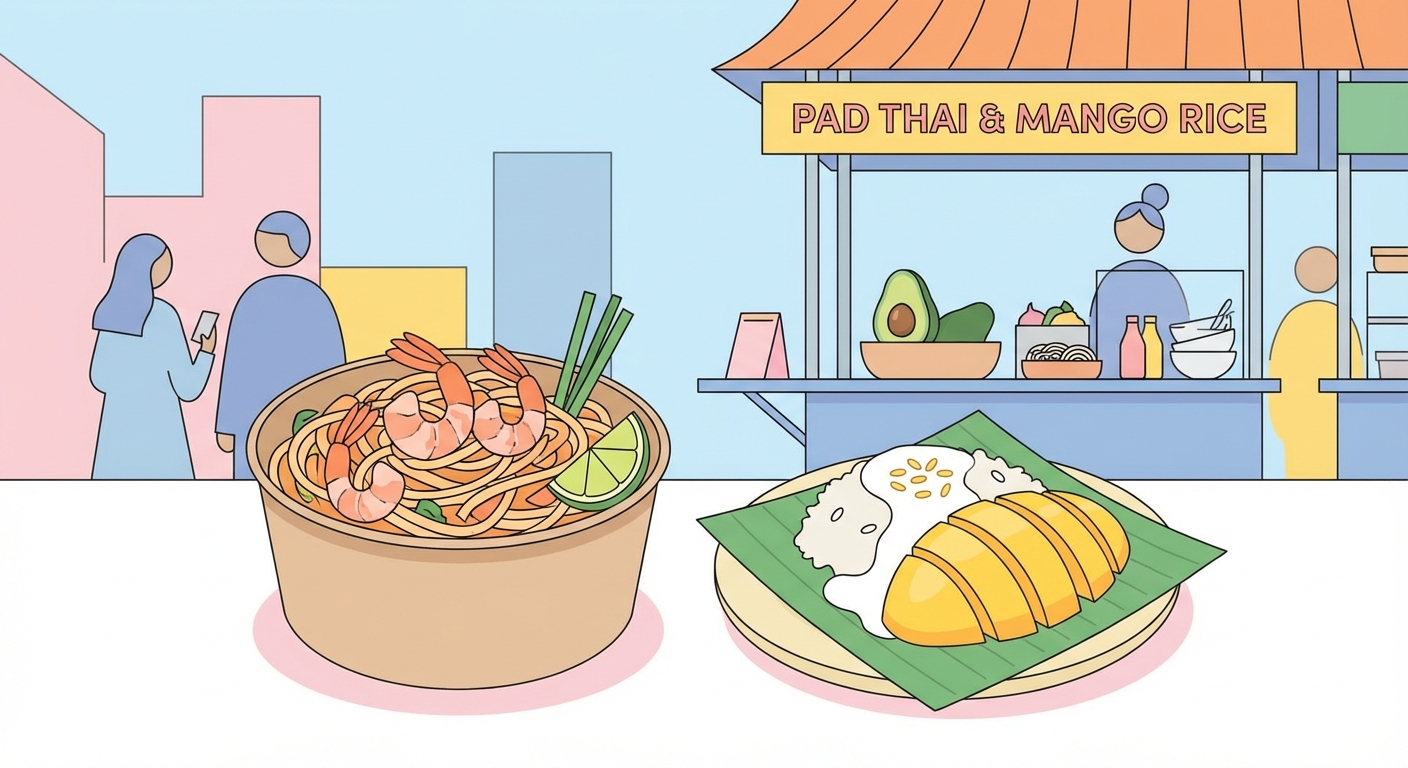
  • Pad Thai — Stir-fried rice noodles with egg, tofu or shrimp, bean sprouts, green onion and crushed peanuts, finished with lime. The quintessential Thai street dish.
  • Tom Yum Goong — Hot and sour prawn soup with lemongrass, galangal, kaffir lime and fresh chilli. Intensely aromatic and deeply satisfying.
  • Som Tam (Green Papaya Salad) — Shredded unripe papaya pounded with chilli, lime, fish sauce and palm sugar. Spicy, tangy and addictive.
  • Massaman Curry — Rich, mildly spiced curry with tender beef or chicken, potato and roasted peanuts, influenced by Persian and Indian flavours. Perfect with jasmine rice.
  • Mango Sticky Rice (Khao Niao Mamuang) — Sweet glutinous rice drizzled with coconut cream and served with fresh mango slices. The dessert of Thailand.
  • Khao Soi — Northern Thailand's signature dish: creamy coconut-curry broth over egg noodles, topped with crispy fried noodles and pickled mustard greens. A Chiang Mai essential.

Best time to visit Thailand

The cool, dry season (November–February) is the best time to visit Thailand. Temperatures are comfortable (25–30°C), skies are blue and rainfall is minimal across the country. This is peak tourist season — prices rise and popular islands get busy, but the weather makes it worth it. Book ahead for accommodation in Phuket, Koh Samui and Chiang Mai during December–January.

The hot season (March–May) brings intense heat (35–40°C), particularly in Bangkok and the north, but also the spectacular Songkran water festival in April — Thailand's exuberant New Year celebration where the entire country erupts into street-wide water fights.

The wet season (June–October) brings heavy afternoon downpours and grey skies, especially on the Andaman coast (Phuket, Krabi). However, the Gulf coast (Koh Samui, Koh Phangan) follows a different weather pattern — its peak rain falls October–December. Budget travellers find excellent value during the wet season with up to 50% lower prices and far fewer crowds.

What to pack for your visit to Thailand

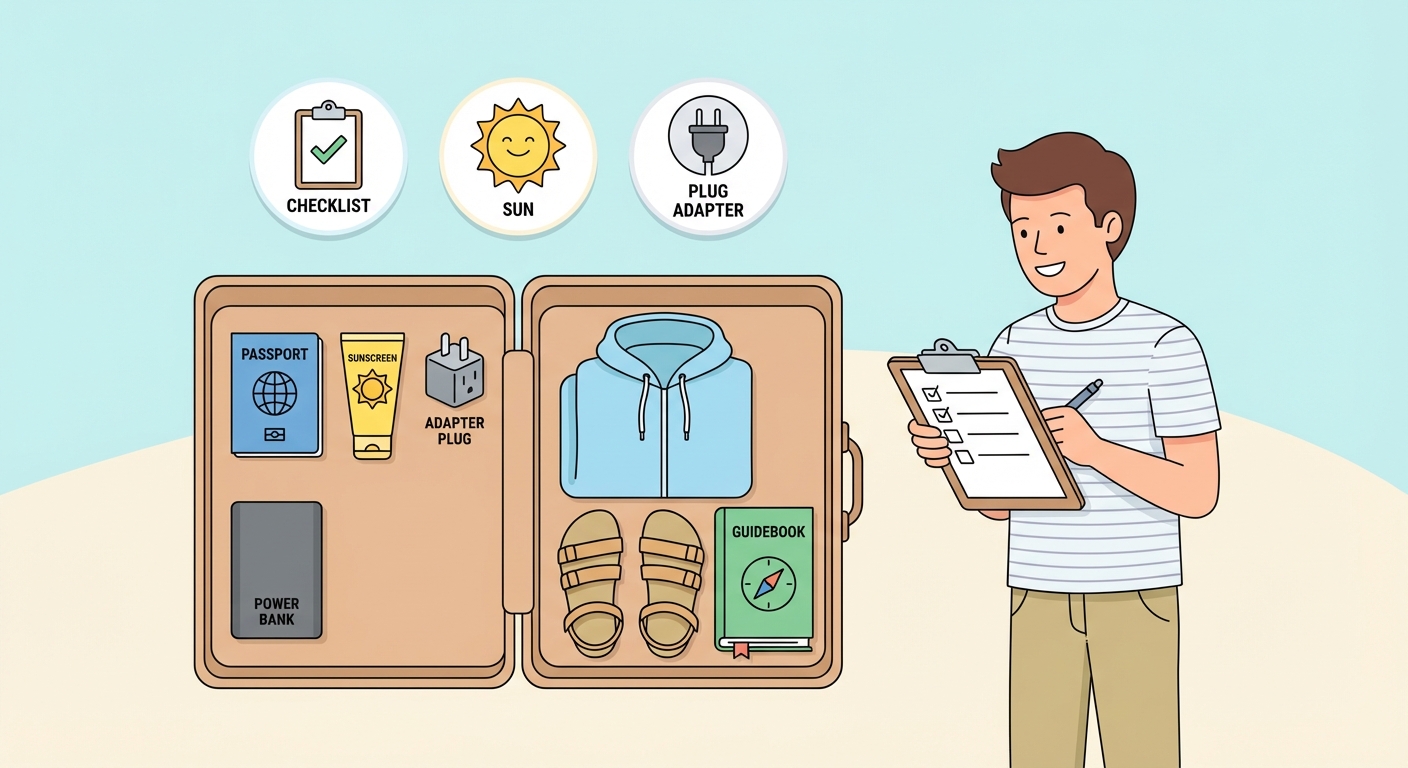
Thailand is tropical and devout — your packing list needs to account for the heat, humidity, sudden downpours and the modesty required for temple visits. Most things can be bought cheaply on arrival, but these essentials are worth packing from home.

  • Lightweight, breathable clothing — Linen or moisture-wicking fabrics work best. Avoid dark colours that absorb heat. Pack a sarong or scarf for temple cover-ups.
  • High-SPF sunscreen — Thai pharmacies sell sunscreen but imported brands are expensive. Pack a generous supply of SPF 50+ from home.
  • Insect repellent — DEET-based repellent is essential in jungle areas, Chiang Mai mountains and anywhere near standing water, especially in wet season.
  • Reef-safe flip flops — For beach days, temple visits and hostel bathrooms. Sandals you can slip on and off in seconds are invaluable.
  • Small backpack or day bag — For day trips, markets and island hopping. A lightweight pack is more practical than a handbag in the heat.
  • Your uPhone eSIM — Activate before flying. Thailand's AIS and DTAC networks offer excellent 4G coverage on islands and in cities, letting Grab, Google Maps and translation apps run seamlessly.

Frequently Asked Questions

Everything you need to know about your Thailand eSIM

The eSIM connects to AIS, TrueMove H, and dtac. All three cover 4G on bands B1, B3, B8, B40 and 5G on n28 and n41. This means you get broad nationwide access, though mmWave 5G on n258 is limited to dense urban areas and select venues.

Band B40 (2300 MHz) is widely used for LTE in Thailand but absent from many international phone models. If your phone lacks B40, you may experience weaker coverage indoors or in rural areas. Check your device specs before travel.

No. The eSIM only provides coverage within Thailand's borders. Once you cross into Laos, Myanmar, Cambodia, or Malaysia, the connection stops. You would need a separate eSIM or roaming plan for those countries.

Data is not throttled or filtered beyond standard network management. You get full-speed access up to the plan limit. However, Thailand does block certain content by law, such as gambling sites, which may be inaccessible.

Coverage on major islands and in Chiang Mai city is strong thanks to AIS, TrueMove H, and dtac. However, remote mountain trails or small uninhabited islands may have weak or no signal, as networks concentrate on populated areas.

Compare 1 GB / 7 days, 3 GB / 15 days and 10 GB or more / 30 days. Use the shorter profiles for lighter maps and messaging use, then compare the larger allowance for streaming, video calls or work apps.

The start rule is product-specific. Review the selected plan details before installing it so you know whether any action is required before arrival.

Save the QR code, manual installation details, APN guidance and the support instructions supplied with the selected plan.
24/7 Support

Need help? We're here for you.

Questions before or during your trip — our support team is always available via live chat and email. Typical response time under 2 minutes.

Chat with us
uPhone customer support