🇦🇺 eSIM for Australia
- Unlimited data
- 7-day validity
- Fast and reliable internet
- No more roaming charges
- Instant QR code by email
* As low as price reflects the cheapest per-day rate, based on the longest available unlimited data plan duration.







Why choose us?
See how uPhone compares with other options in Australia.
eSIM prices for Australia
All prices in USD
7 days of unlimited data in Australia costs $17.60 — about $2.51 a day on Telstra, Optus or Vodafone AU, with no roaming charge and no SIM to swap. In Australia, 5G is live and median mobile download speed is 84.8 Mbps.
Which networks you connect to in Australia
Your eSIM roams onto Australia's own operators. These are the networks and the frequencies they run — check your phone supports them before you travel.
Source: Ookla Speedtest Global Index, August 2025
Coverage in Australia
Telstra 3G network shut down June 2024; Optus 3G shut down October 2024; Vodafone AU 3G shut down December 2023. Remote outback regions have no service from any carrier. Band B28 (700 MHz) is widely used for rural LTE coverage and may be absent from some international phones.

Enjoy your Australia vacation
Australia is one of the world's great adventures — a continent-country of staggering natural diversity where the same week can take you from the coral gardens of the Great Barrier Reef to the stark red monoliths of the Outback to the surf beaches of the Gold Coast. Sydney's harbour-front skyline, Melbourne's laneway coffee culture, the ancient Aboriginal rock art of Kakadu, the wine regions of Margaret River and the Barossa Valley — Australia rewards curious, unhurried travellers who venture beyond the east-coast trail. With a uPhone eSIM you'll connect to Telstra, Optus or Vodafone networks for reliable 4G/5G in cities and along the major coastal highways from the moment you land.
Top attractions in Australia
Australia's scale means experiences are extraordinary and varied — ancient geological formations, unique wildlife, world-class cities and reef systems. These are the highlights that define the country.
- Sydney Opera House & Harbour Bridge — The two icons of the Sydney harbour are even more spectacular in person. Take a BridgeClimb to the summit of the Harbour Bridge for a panorama no photograph can fully capture.
- Great Barrier Reef, Queensland — The world's largest coral reef system: snorkel or dive with turtles, reef sharks and thousands of species of fish. Cairns and the Whitsundays are the best base for reef access.
- Uluru (Ayers Rock), Northern Territory — The sacred sandstone monolith of the Anangu people glows amber and crimson at sunrise and sunset. Respect local culture and take the base walk rather than climbing.
- The Twelve Apostles, Great Ocean Road — Limestone sea stacks rising from the Southern Ocean along one of the world's most scenic coastal drives. Hire a car and take 2–3 days.
- Daintree Rainforest, Queensland — The world's oldest surviving tropical rainforest (135 million years old) meets the reef at Cape Tribulation — a uniquely Australian wilderness.
- Melbourne's Arts & Coffee Culture — Wander Fitzroy's street art laneways, drink single-origin coffee in a converted warehouse and visit the National Gallery of Victoria — Australia's most visited museum.

Popular foods to try in Australia
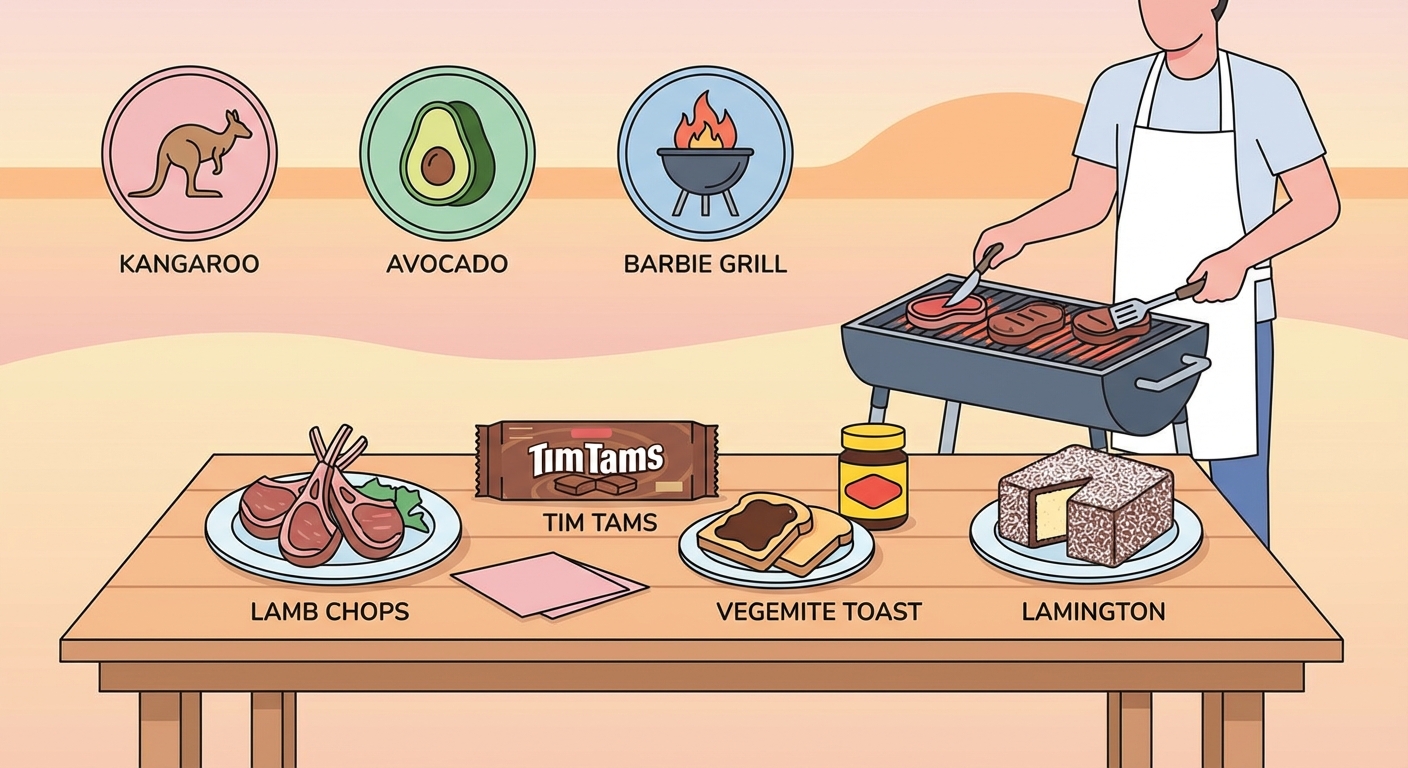
Australian cuisine is one of the world's great multicultural food stories — Chinese, Vietnamese, Japanese, Lebanese, Greek and Italian communities have shaped a food culture that's as diverse as its immigration history. Add the world's best coffee culture, incredible fresh seafood and native ingredients, and eating in Australia is a genuinely exciting experience.
- Barramundi & Prawns — Australia's finest fish, grilled or pan-fried and served simply with lemon. Queensland prawns from the Whitsundays are among the world's sweetest.
- Meat Pies — Australia's great comfort food: shortcrust pastry filled with slow-cooked beef and gravy, sometimes topped with ketchup. Essential at a football match or from a petrol station.
- Smashed Avo on Toast — Yes, it's a cliché, but a truly great version — sourdough, perfectly ripe avocado, lemon zest, chilli flakes — at a Melbourne café is genuinely outstanding.
- Tim Tams — Chocolate biscuit sandwiches, available everywhere. The "Tim Tam Slam" (bite both ends, use as a straw for hot chocolate) is a rite of passage.
- Lamington — Sponge cake squares rolled in chocolate sauce and desiccated coconut. Australia's national cake, found at every bakery and school fundraiser.
- Flat White — Australia's contribution to global coffee culture: a double ristretto shot in velvety microfoamed milk, smaller and stronger than a latte. The flat white perfected.
Best time to visit Australia
Australia's seasons are reversed from the northern hemisphere — summer runs December–February, winter June–August. The best time to visit depends heavily on which part of the country you're heading to.
For Sydney and Melbourne, spring (September–November) and autumn (March–May) offer mild, comfortable temperatures (18–25°C) without the extreme summer heat. December–February in Sydney is warm and beach-perfect; Melbourne summers can spike to 40°C+ but generally stay pleasantly warm.
For the Tropical North (Cairns, Great Barrier Reef, Darwin, Kakadu), the dry season (May–October) is the only comfortable time to visit — the wet season (November–April) brings flooding rains and humidity that close roads and make Kakadu's landscape inaccessible. For Uluru, spring and autumn are best — summer (November–March) brings dangerous 45°C+ temperatures in the Red Centre.

What to pack for your visit to Australia
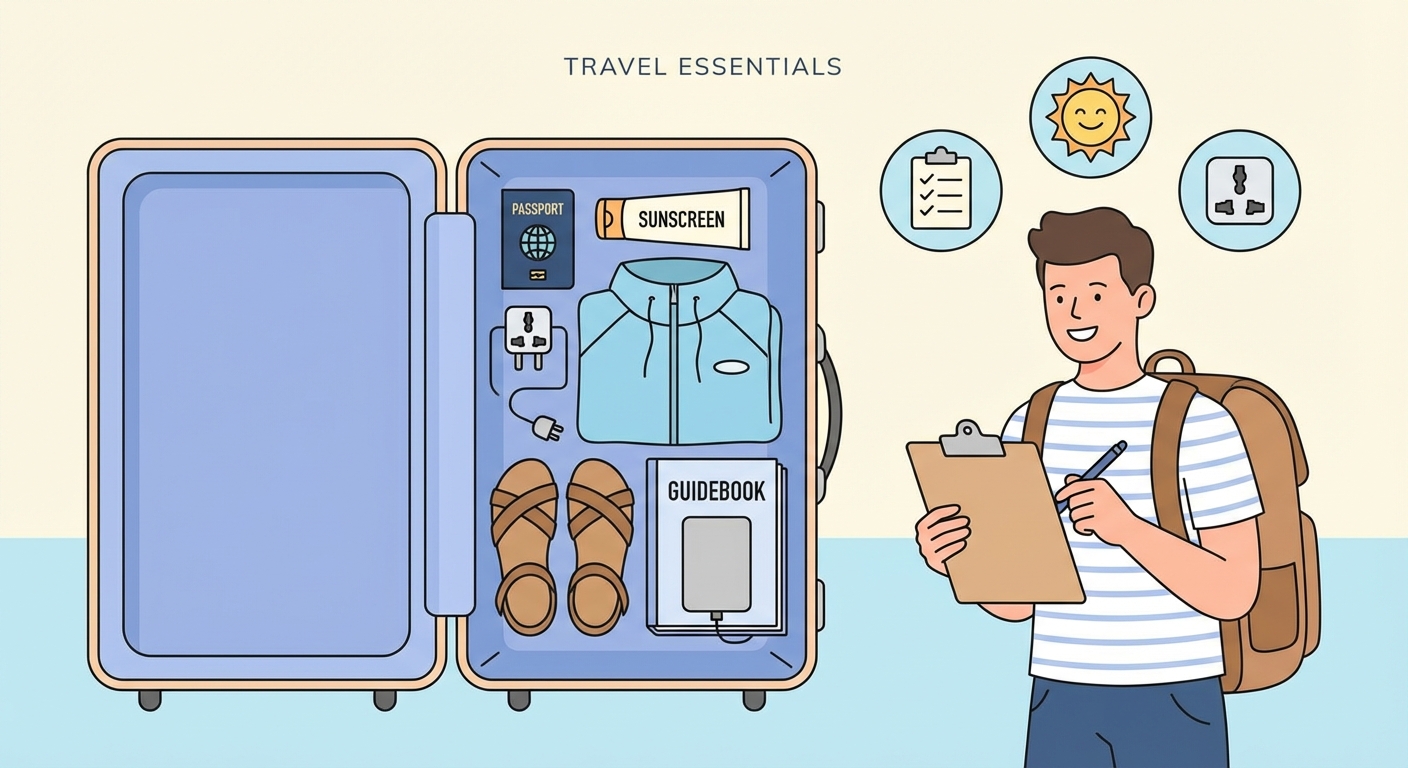
Australia's UV index is extreme — one of the world's highest — and outdoor activities are central to the experience. Sun protection is not optional; it's a necessity. Beyond that, pack for adventure and the specific climates of your chosen regions.
- SPF 50+ sunscreen — Australia's UV is genuinely dangerous and skin cancer rates are the world's highest. Reapply every 90 minutes outdoors, even on cloudy days.
- A wide-brimmed hat — The Akubra-style sun hat isn't a cliché — it's practical survival gear in the Outback and on reef days. A packable sun hat covers most situations.
- Insect repellent — Mozzies are fierce in tropical Queensland, the Northern Territory and coastal wetlands. DEET-based repellent is essential in the wet season.
- Layers for coastal evenings — Sydney and Melbourne evenings can be surprisingly cool even in summer. A light fleece or denim jacket is always useful.
- Reef-safe sunscreen for the GBR — Regular sunscreen is harmful to coral. Many reef operators require or strongly recommend reef-safe mineral sunscreen.
- Your uPhone eSIM — Connects on Telstra's network for the widest rural coverage in Australia, including along the Great Ocean Road, Uluru and the main Outback highways.
Frequently Asked Questions
Everything you need to know about your Australia eSIM
Need help? We're here for you.
Questions before or during your trip — our support team is always available via live chat and email. Typical response time under 2 minutes.
Chat with us
Bundle Australia with other nearby countries.

Multiple countries.
Other uPhone eSIM destinations
Explore eSIM plans for more countries around the world.