






🇮🇳 eSIM for India

As low as $5.01/day*
Excellent ★★★★★ Based on 2,400+ reviews
  • Unlimited data
  • 7-day validity
  • Fast and reliable internet
  • No more roaming charges
  • Instant QR code by email
Start enjoying unlimited data
Number of days
More days, lower the price!
7
Number of eSIMs
More eSIMs, more discounts
1
Install your eSIM before or during your trip. Your plan will begin once you arrive at your destination and turn on your eSIM.

* As low as price reflects the cheapest per-day rate, based on the longest available unlimited data plan duration.

Secure Payment
Visa Mastercard PayPal Amex Diners JCB
India eSIM travel illustration

Why choose us?

See how uPhone compares with other options in India.

uPhone
Local SIM
Roaming
Unlimited data plans
Instant activation
Keep your existing number
No hidden fees
No contract
24/7 support
South Asia eSIM

Travel the Region with South Asia eSIM

Cover India and all nearby countries on one regional eSIM — no SIM swapping, no extra fees. Plans from $0.76.

View South Asia Plans
Internet restrictions illustration
Minor Restrictions

Internet Access in India

India has permanently banned TikTok and some Chinese apps. Regional internet shutdowns occur periodically in contested areas. Social media may be restricted during certain civil disturbances.

Social Media Political Content

Affected services: TikTok (permanently banned), regional internet shutdowns

🇮🇳

eSIM prices for India

All prices in USD

7 days of unlimited data in India costs $40.82 — about $5.83 a day on Jio, Airtel or Vi (Vodafone Idea), with no roaming charge and no SIM to swap. In India, 5G is live and median mobile download speed is 51.5 Mbps.

Duration Price Per day
1 day $6.88 $6.88/day
3 days $18.20 $6.07/day
5 days $29.52 $5.90/day
7 days $40.82 $5.83/day
10 days $57.80 $5.78/day
15 days $75.13 $5.01/day
30 days $170.98 $5.70/day
🇮🇳

Which India eSIM plan fits your trip?

Choose an India eSIM by matching the allowance to your trip length and expected use, then check the existing network table for phone compatibility. The page keeps its country-specific operator, band and median-speed information, while the sections below help you compare plan sizes and check operator coverage maps for your itinerary.

Start with the length of your stay, then allow for navigation, messaging, streaming and work use. A fixed-volume plan gives you one data pool across its stated validity period.

Short trip

1 GB / 7 days

Best for: A short visit where mobile data is mainly for maps, messages and occasional browsing.

This is the smallest fixed-volume profile for a stay of up to seven days.

Usage tip: Use Wi-Fi for video, photo backups and app updates to keep more data available while travelling.
Two-week trip

3 GB / 15 days

Best for: Trips of up to two weeks with regular navigation, messaging and light social-media use.

The 3 GB allowance remains available across the stated fifteen-day validity period.

Usage tip: Download maps before intercity journeys and use mobile data for live directions and updates.

Longer or higher use

10 GB or more / 30 days

Best for: Longer stays or travellers planning regular streaming, video calls or work-app use.

A larger thirty-day data pool gives heavier activities more room than the short-trip profiles.

Usage tip: Compare your normal phone usage with the available allowances and monitor usage during the trip.

🇮🇳

Which networks you connect to in India

Your eSIM roams onto India's own operators. These are the networks and the frequencies they run — check your phone supports them before you travel.

Operator 4G / LTE bands 5G bands 5G
Jio B3, B5, B40 n28, n78, n258 Yes
Airtel B1, B3, B5, B8, B40 n8, n78, n258 Yes
Vi (Vodafone Idea) B1, B3, B8, B41 n78 Yes
BSNL B1, B3, B8, B28 — No
51.5 Mbps
Median download
6.3 Mbps
Median upload

Source: Ookla Speedtest Global Index, July 2025

Coverage in India

BSNL 3G/2G-only in many rural areas; B28 (700 MHz) used by BSNL and Jio for rural coverage, often missing from international phones; n258 mmWave deployed by Jio and Airtel but rarely supported by foreign devices.

Where to check mobile coverage in India

TRAI provides access to coverage maps from Jio, Airtel, Vodafone Idea and BSNL, with filters for available mobile technologies. Use the map for the locations on your itinerary and confirm the network details of the selected eSIM product.

Cities and accommodation

Check the operator maps for each city and the neighbourhood around your accommodation. Use the technology filters to compare the type of service shown for that location.

Intercity and rural routes

Coverage can change along long road and rail routes. Check the route as well as the destination, and compare your phone with the lower-frequency bands shown in the existing network table.

Nepal and onward travel

For an itinerary that continues beyond India, compare a matching destination plan with a regional option before departure and confirm every included country in the product details.

Phone compatibility in India

Compare your phone with the 4G and 5G bands in the existing India network table. B28 is relevant to wider-area LTE coverage in the published network notes, while n78 is listed across the 5G operators shown on the page.

Set up the India eSIM for your trip

Keep the QR code and installation instructions available offline, and complete each step according to the selected product's instructions.

When validity starts: Validity-start rules can differ by product. Check the selected plan details before installation and travel.

  1. Confirm that your phone is unlocked and supports eSIM before purchase.
  2. Save the QR code or manual installation details somewhere you can reach without mobile data.
  3. Use reliable Wi-Fi to install the profile at the time recommended in the product instructions.
  4. When you are ready to use it, select the travel eSIM for cellular data and apply the stated roaming and APN settings.
  5. Keep roaming disabled on your home line if you want to avoid using its travel data.
Network and coverage sources, checked 2026-10-10
India for First-Timers: A Calm Seven-Day Plan podcast cover
🎧 Listen to the India travel podcast

India for First-Timers: A Calm Seven-Day Plan

Explore India's Golden Triangle: Delhi's monuments and markets, Agra's Taj Mahal, and Jaipur's royal palaces and vibrant bazaars. A manageable introduction to India's culture, history, and cuisine.

Episode, itinerary and transcript 11:18 · Full transcript included
India travel guide

Enjoy your India vacation

India is not a destination — it is an experience that arrives at every one of your senses simultaneously. The scale, colour, noise and spiritual intensity of the subcontinent can be overwhelming and transformative in equal measure. Rajasthan's pink cities and desert forts; the Taj Mahal at dawn; the backwaters of Kerala gliding past coconut palms; the sacred chaos of Varanasi's ghats at sunrise; the Himalayan hill stations of Darjeeling and Shimla; the tigers of Ranthambhore — India contains multitudes. It rewards patient, open-minded travellers who accept that things rarely go exactly to plan — and who discover that the unplanned moments are often the most memorable. With a uPhone eSIM you'll connect to Jio or Airtel for solid 4G coverage across India's major cities and tourist destinations.

Top attractions in India

India's UNESCO World Heritage Sites alone number 42 — choosing highlights from a civilisation spanning 5,000 years is a formidable task. These are the experiences that define most first-time visitors' itineraries.

  • Taj Mahal, Agra — The world's most recognised monument of love: a white marble mausoleum of extraordinary symmetry and perfection, built over 22 years by 20,000 craftsmen. Visit at sunrise before crowds arrive — the light is magical.
  • Varanasi Ghats, Uttar Pradesh — The holiest city in Hinduism, on the banks of the Ganges. The Ganga Aarti ceremony at dusk — priests performing fire rituals with thousands watching from boats — is one of India's most powerful experiences.
  • Amber Fort & Hawa Mahal, Jaipur — Rajasthan's Pink City centred on the hilltop Amber Fort, reachable by elephant; the Palace of Winds (Hawa Mahal) is Jaipur's most photographed facade — 953 small windows designed for court ladies to observe the street.
  • Kerala Backwaters — A 900km network of canals, rivers, lakes and lagoons along Kerala's coast. An overnight houseboat from Alleppey through the backwaters past paddy fields and fishing nets is an unforgettable experience.
  • Ranthambhore National Park, Rajasthan — One of India's best national parks for tiger sightings — a former maharaja's hunting ground where wild tigers now roam the ruins of a 10th-century fort.
  • Hampi, Karnataka — A surreal UNESCO landscape of giant boulders and 14th-century Vijayanagara Empire ruins stretching across the Tungabhadra riverbank. One of India's most extraordinary and undervisited archaeological sites.

Popular foods to try in India

Indian cuisine is not one cuisine but a mosaic of dozens — each state, region and community has its own distinct food traditions, spice profiles and cooking techniques. Eating regionally is the most rewarding approach: eat what the local state does best.

  • Biryani — Fragrant basmati rice slow-cooked with meat (chicken, lamb, beef) and whole spices. The Hyderabadi dum biryani and Lucknow's awadhi version are particularly celebrated. Every region claims the best.
  • Masala Dosa — South India's great breakfast: a crispy fermented rice and lentil crepe filled with spiced potato, served with sambar (lentil soup) and coconut chutney. The best dosas in the world are in Bengaluru and Chennai.
  • Butter Chicken (Murgh Makhani) — The dish that conquered the world: tender chicken in a rich, buttery tomato-cream sauce. Invented in Delhi; best eaten in North Indian dhabas (roadside restaurants) rather than tourist restaurants.
  • Pani Puri (Golgappa) — Hollow crispy spheres filled with spiced potato, chickpeas and tamarind-mint water. An explosively flavoured street food eaten in one bite — a genuine Indian street food experience.
  • Thali — A complete meal served on a large plate or banana leaf: rice, dal, multiple curries, raita, pickle and bread. Rajasthani, Gujarati and South Indian thalis are each extraordinary in their own right.
  • Chai — Spiced milk tea with ginger, cardamom, cinnamon and black pepper, sweetened and served in small clay cups at every street corner. India's universal social ritual and the best travel companion in any situation.

Best time to visit India

October to March is the best time to visit most of India — the monsoon has retreated, temperatures are manageable (20–30°C in the plains, cooler in the hills) and skies are clear. This is the peak tourist season for Rajasthan, Agra, Goa, Kerala and most of South India.

For the Himalayas (Ladakh, Spiti, Manali), summer (June–September) is the only accessible window when high mountain passes are clear of snow. The Zanskar Valley and Leh are extraordinary in July–August. Darjeeling and the Sikkim tea country are beautiful in spring (April–May) and autumn (September–November).

Monsoon (June–September) transforms India's landscapes from parched to lush — Rajasthan's forts, Kerala's backwaters and Hampi's boulders are beautiful in the rains if you accept the occasional downpour. Goa in monsoon is dramatically quieter and significantly cheaper, though many beach shacks close.

What to pack for your visit to India

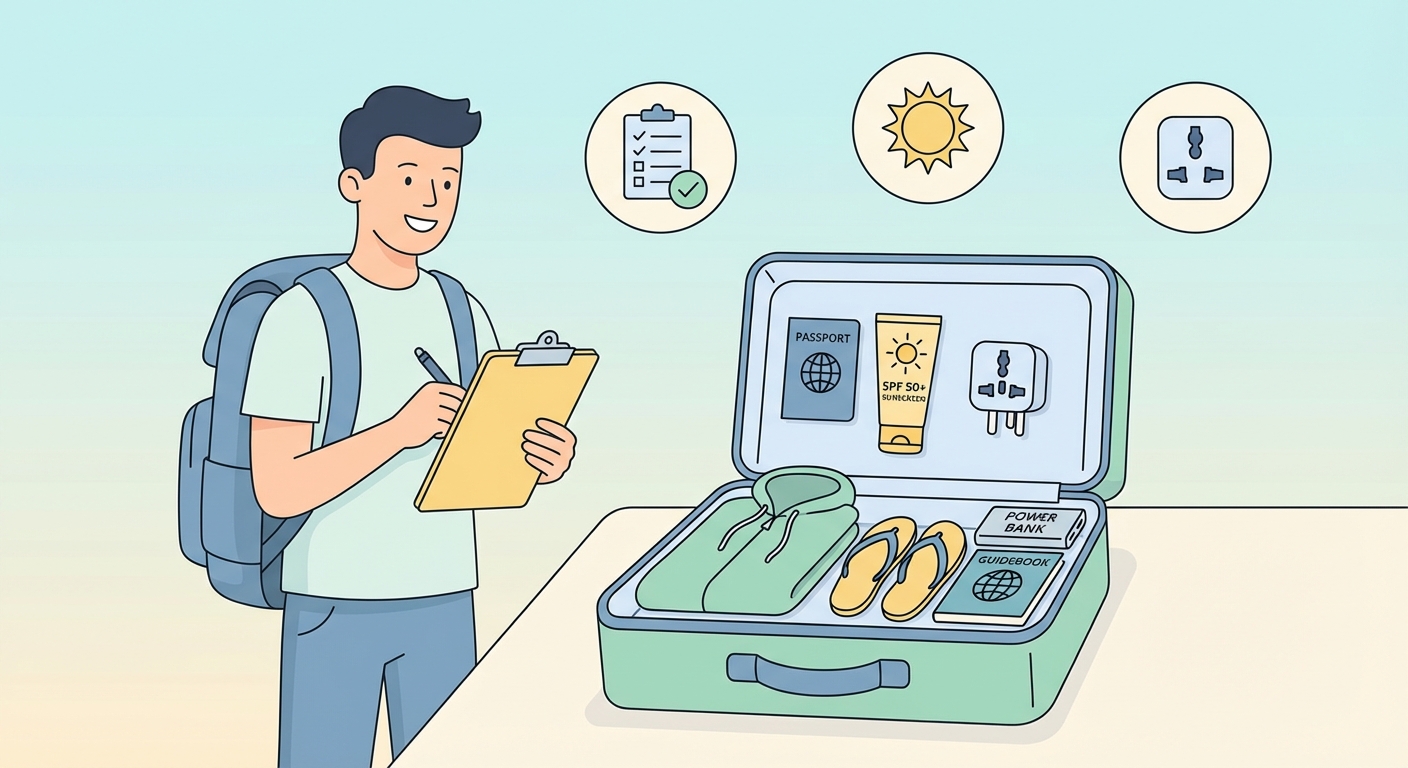
India's combination of intense heat, dust, spiritual sites and widely varying climates creates a specific packing list. Travel light — laundry in India is cheap, fast and excellent quality.

  • Modest, lightweight clothing — Loose, full-length clothing in natural fibres is appropriate for temples, mosques and everyday India — and also practical in the heat. Avoid shorts and sleeveless tops in smaller towns.
  • Sturdy sandals or walking shoes — You'll remove shoes constantly at temples and religious sites. Sandals with good support (Tevas or Birkenstocks) that are easy to slip on and off are ideal for most of India.
  • A small medical kit — Oral rehydration salts, ciprofloxacin (for travellers' diarrhoea — consult your doctor before travel), antihistamines, ibuprofen and blister plasters. Basic pharmacies are widespread in cities.
  • Insect repellent — Malaria and dengue are present in parts of India. DEET-based repellent is essential in jungle areas, coastal regions and any destination during or after monsoon.
  • A filtered water bottle — Tap water is not safe to drink. A filtered bottle (LifeStraw, Berkey or Grayl) reduces plastic waste and saves money on bottled water over a long trip.
  • Your uPhone eSIM — Jio and Airtel's 4G networks cover India's cities, tourist routes and national parks well. Signal can be limited in remote Himalayan valleys and jungle reserves — download offline maps in advance.

Frequently Asked Questions

Everything you need to know about your India eSIM

Our information covers only networks inside India. We cannot confirm whether this eSIM includes coverage in Nepal or any neighbouring country. Check the eSIM provider's coverage map or product description for details on cross-border roaming.

Jio uses n258 for mmWave 5G, which is rarely supported by international phones. However, Jio also uses n28 and n78 for 5G. If your phone supports n78, it can still access Jio's 5G in many areas, though not the fastest mmWave layer.

In rural areas, BSNL often runs only 3G or 2G, and both BSNL and Jio rely on band B28 (700 MHz) for rural coverage. Many international phones lack B28. Without that band, your connection in those areas may be weak or unavailable.

Vi stands for Vodafone Idea. It is a single operator, not two separate networks. If your phone scans, look for "Vi" or "Vodafone IN" or "Idea". Its 4G uses bands B1, B3, B8, and B41, and its 5G uses n78.

Indian law requires physical SIM buyers to provide ID and biometric registration. For eSIMs sold by international providers, the requirement varies. Check your eSIM provider's setup instructions to confirm whether any ID upload or passport scan is needed.

Use 1 GB for a short light-use trip, 3 GB for a longer stay with regular maps and messaging, or compare plans of 10 GB and above for streaming, video calls or work use.

Use the operator coverage maps available through TRAI and filter by mobile technology. Check your accommodation, main destinations and the road or rail routes between them.

The start rule is product-specific. Review the selected plan details before installing it so you know whether any action is required before arrival.
24/7 Support

Need help? We're here for you.

Questions before or during your trip — our support team is always available via live chat and email. Typical response time under 2 minutes.

Chat with us
uPhone customer support