





🇫🇷 eSIM for France

As low as $1.22/day*
Excellent ★★★★★ Based on 2,400+ reviews
  • Unlimited data
  • 7-day validity
  • Fast and reliable internet
  • No more roaming charges
  • Instant QR code by email
Start enjoying unlimited data
Number of days
More days, lower the price!
7
Number of eSIMs
More eSIMs, more discounts
1
Install your eSIM before or during your trip. Your plan will begin once you arrive at your destination and turn on your eSIM.

* As low as price reflects the cheapest per-day rate, based on the longest available unlimited data plan duration.

Secure Payment
Visa Mastercard PayPal Amex Diners JCB
France eSIM travel illustration

Why choose us?

See how uPhone compares with other options in France.

uPhone
Local SIM
Roaming
Unlimited data plans
Instant activation
Keep your existing number
No hidden fees
No contract
24/7 support
Europe eSIM

Travel the Region with Europe eSIM

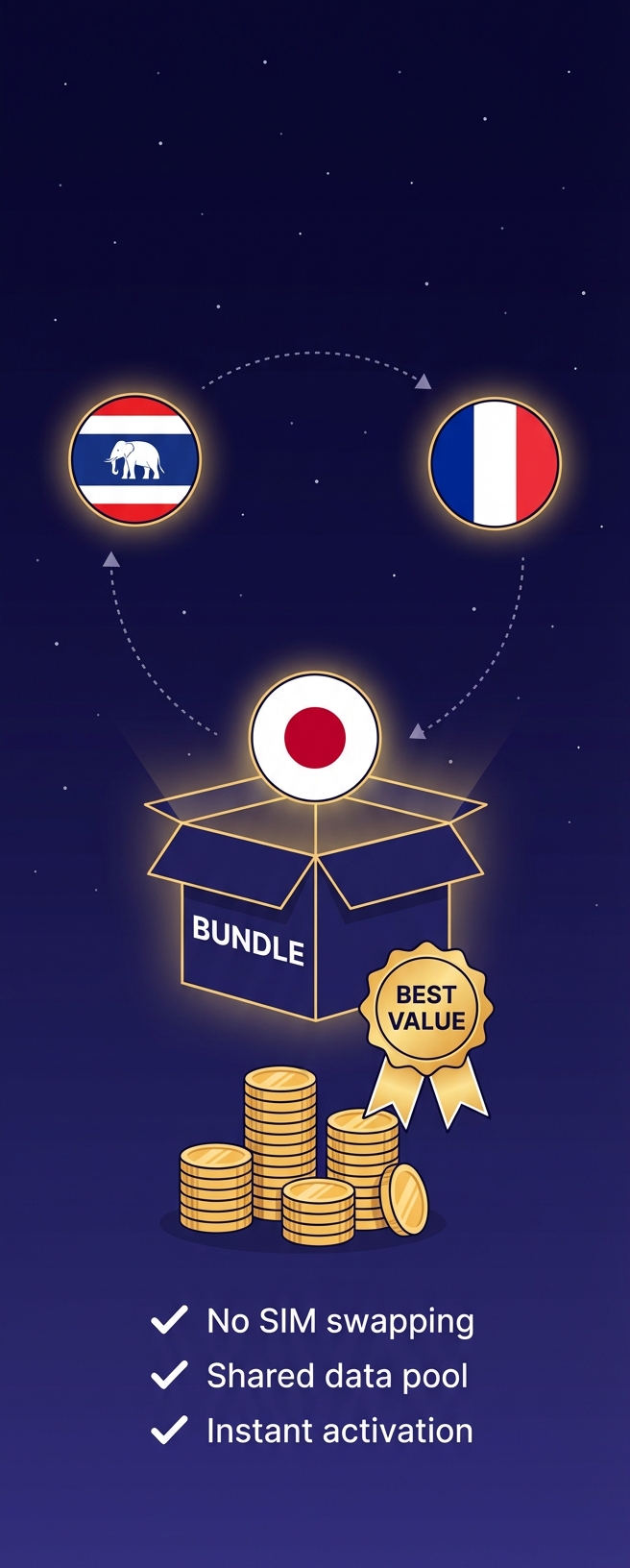
Cover France and all nearby countries on one regional eSIM — no SIM swapping, no extra fees. Plans from $0.61.

View Europe Plans
🇫🇷

eSIM prices for France

All prices in USD

7 days of unlimited data in France costs $15.46 — about $2.21 a day on Orange, SFR or Bouygues Telecom, with no roaming charge and no SIM to swap. In France, 5G is live and median mobile download speed is 65.2 Mbps.

Duration Price Per day
1 day $3.18 $3.18/day
3 days $6.90 $2.30/day
5 days $11.24 $2.25/day
7 days $15.46 $2.21/day
10 days $21.30 $2.13/day
15 days $26.06 $1.74/day
30 days $36.48 $1.22/day
180 days $44.00 $0.24/day
🇫🇷

Which France eSIM plan fits your trip?

Choose a France eSIM by matching the allowance to your trip length and expected use, then check the existing network table for phone compatibility. The page keeps its country-specific operator, band and median-speed information, while the sections below help you compare plan sizes and check an address or route before travelling.

Start with the length of your stay, then allow for navigation, messaging, streaming and work use. A fixed-volume plan gives you one data pool across its stated validity period.

Short trip

1 GB / 7 days

Best for: A short visit where mobile data is mainly for maps, messages and occasional browsing.

This is the smallest fixed-volume profile for a stay of up to seven days.

Usage tip: Use Wi-Fi for video, photo backups and app updates to keep more data available while you are out.


Two-week trip

3 GB / 15 days

Best for: Trips of up to two weeks with regular navigation, messaging and light social-media use.

The 3 GB allowance remains available across the stated fifteen-day validity period.

Usage tip: Download maps before longer rail or road journeys and use mobile data for live directions.

Longer or higher use

10 GB or more / 30 days

Best for: Longer stays or travellers planning regular streaming, video calls or work-app use.

A larger thirty-day data pool gives heavier activities more room than the short-trip profiles.

Usage tip: Compare your normal phone usage with the available allowances and monitor usage during the trip.

🇫🇷

Which networks you connect to in France

Your eSIM roams onto France's own operators. These are the networks and the frequencies they run — check your phone supports them before you travel.

Operator 4G / LTE bands 5G bands 5G
Orange B1, B3, B7, B20, B28 n1, n3, n7, n20, n28, n78 Yes
SFR B1, B3, B7, B20, B28 n28, n78 Yes
Bouygues Telecom B1, B3, B7, B20, B28 n1, n28, n78 Yes
Free Mobile B1, B3, B7, B28 n28, n78 Yes
65.2 Mbps
Median download
10.2 Mbps
Median upload

Source: Ookla Speedtest Global Index, Q2 2025

Coverage in France

B20 (800 MHz) is the primary rural/suburban LTE coverage band across all operators; some foreign-market phones lack B20, resulting in reduced indoor and rural coverage. Orange has decommissioned its 2G and 3G networks as of 2026.

Where to check mobile coverage in France

ARCEP's Mon réseau mobile service compares coverage and service-quality information for France's main mobile operators. Use it alongside the selected product details, because the network available to an individual eSIM depends on that product.

Hotels, addresses and daily routes

Check the places where you will stay and the routes between them on Mon réseau mobile. The map also includes information for transport routes, which is useful for rail and road itineraries.

Rural and indoor use

The existing France network facts identify B20 as an important LTE band for rural and indoor coverage. Check that your phone supports the bands shown in the network table, then compare the relevant operator map for your destination.

Corsica, Monaco and onward travel

Check the selected product's country scope before an island stay or border crossing. For a multi-country itinerary, compare a matching country plan with a regional Europe plan before departure.

Phone compatibility in France

For broad compatibility, compare your phone with the 4G and 5G bands in the existing France network table. B20 is particularly useful for wider-area and indoor LTE coverage, while the listed mid-band frequencies add capacity in supported locations.

Set up the France eSIM for your trip

Keep the QR code and installation instructions available offline, and complete each step according to the selected product's instructions.

When validity starts: Validity-start rules can differ by product. Check the selected plan details before installation and travel.

  1. Confirm that your phone is unlocked and supports eSIM before purchase.
  2. Save the QR code or manual installation details somewhere you can reach without mobile data.
  3. Use reliable Wi-Fi to install the profile at the time recommended in the product instructions.
  4. When you are ready to use it, select the travel eSIM for cellular data and apply the stated roaming and APN settings.
  5. Keep roaming disabled on your home line if you want to avoid using its travel data.
Network and coverage sources, checked 2026-10-10
France for First-Timers: A Calm Seven-Day Plan podcast cover
🎧 Listen to the France travel podcast

France for First-Timers: A Calm Seven-Day Plan

Discover Paris's iconic landmarks and museums, then travel to Lyon for authentic regional food culture. This seven-day route balances famous sights with local experiences and unscheduled time.

Episode, itinerary and transcript 10:42 · Full transcript included
France travel guide

Enjoy your France vacation

France is the world's most visited country for good reason — it has perfected the art of living well and packaged it into one of the most beautiful and culturally rich destinations on Earth. Paris dazzles with world-class art, fashion and cuisine; the Loire Valley's Renaissance châteaux rise from vineyard-lined rivers; the French Riviera strings together glamorous seaside towns from Nice to Menton; Bordeaux and Burgundy pour some of the world's finest wines. Cycling through lavender fields in Provence, skiing in Chamonix or kayaking through the Ardèche gorges — France rewards every type of traveller. With a uPhone eSIM you'll be online from the moment you step off the Eurostar or land at CDG, ready to navigate the Paris Métro and discover hidden bistros off the tourist trail.

Top attractions in France

From the Eiffel Tower to Mont Blanc, France's attractions span art, architecture, gastronomy and nature in equal measure. These are the landmarks and experiences that define a visit to France.

  • Eiffel Tower & the Seine, Paris — The world's most recognisable structure is even more impressive in person. Take the stairs to the second floor for the best views, then stroll the Seine banks at dusk when the city glows golden.
  • The Louvre, Paris — 35,000 works of art across 60,500 square metres. Book timed entry in advance and use a map — getting lost inside is easy and wonderful in equal measure.
  • Mont Saint-Michel, Normandy — A medieval monastery rising from tidal sands on its own island — one of Europe's most dramatic and otherworldly sights. Visit at high tide when water surrounds it completely.
  • Château de Versailles — The palace of Louis XIV: Hall of Mirrors, state apartments and 800 hectares of manicured gardens. Allow a full day and arrive at opening to beat the crowds.
  • Provence Lavender Fields — June–July, the Valensole plateau and Luberon hills turn purple in one of Europe's most photogenic natural spectacles.
  • French Riviera: Nice, Cannes, Èze — The Côte d'Azur combines pastel-coloured old towns, pebble beaches, clifftop villages and azure Mediterranean water along a spectacular coastal drive.

Popular foods to try in France

French cuisine is a UNESCO-listed cultural heritage — and eating in France is one of the great pleasures of European travel. From the boulangerie on every corner to the three-Michelin-star temple of gastronomy, food is taken seriously at every level of French society.

  • Croissant & café au lait — The definitive French breakfast. A butter-laminated croissant from a proper boulangerie (look for "beurre" on the label) is one of the world's great pastries.
  • Steak Tartare — Raw hand-chopped beef with capers, cornichons, shallots, egg yolk and Dijon mustard. A French bistro classic that rewards the adventurous.
  • Bouillabaisse — Marseille's legendary saffron-scented seafood stew with rouille (chilli-garlic sauce) and crusty croutons. The genuine article must be made with local Provençal fish.
  • Croque Monsieur/Madame — The French elevated cheese on toast into an art form: bechamel-smothered ham and gruyère sandwich, toasted until golden and bubbling. Add a fried egg for the Madame.
  • Coq au Vin — Slow-braised chicken in red wine with mushrooms, lardons and pearl onions — the quintessential French country dish, served with crusty bread to mop up the sauce.
  • Crème Brûlée — Silky vanilla custard beneath a caramelised sugar crust that cracks perfectly with the back of a spoon. France's most satisfying dessert.

Best time to visit France

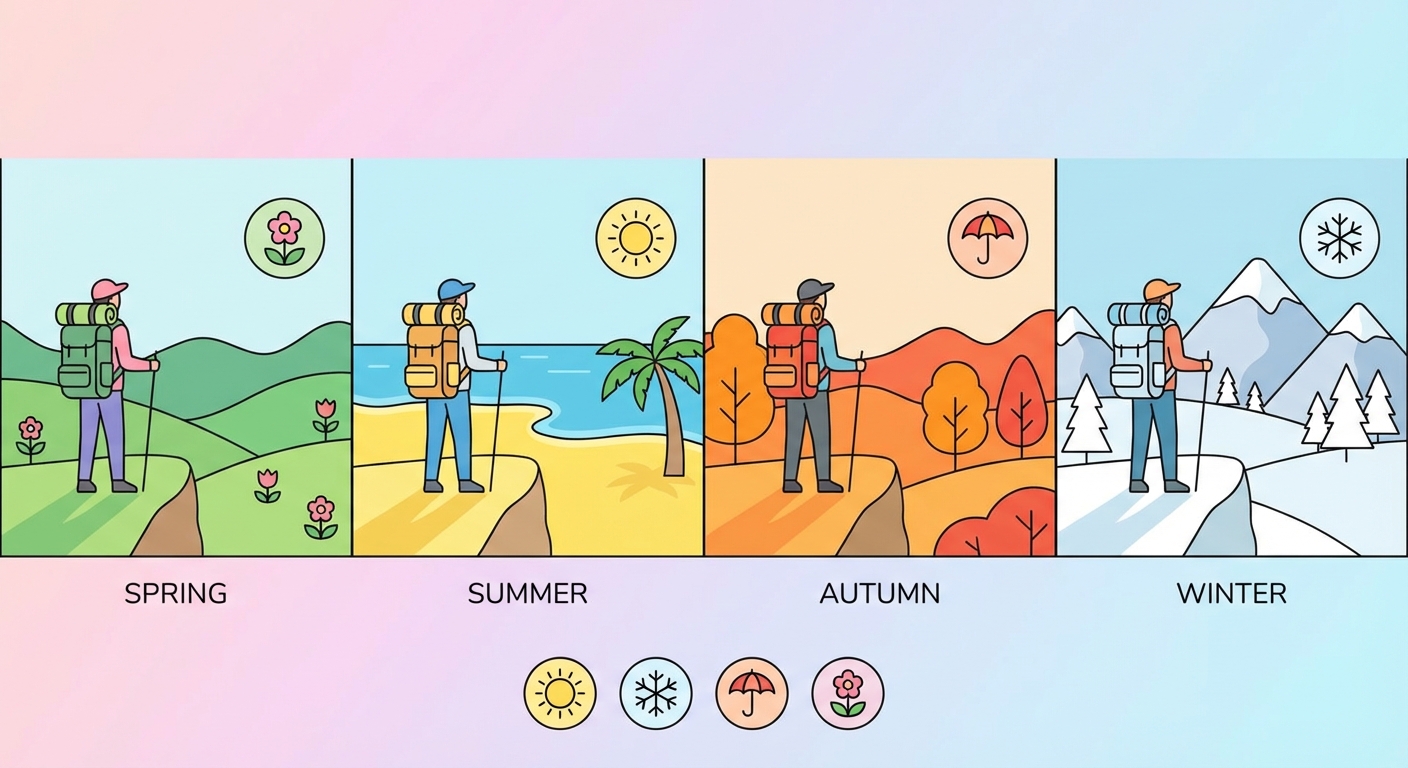
Spring (April–June) is widely considered the best time to visit France — mild temperatures, the countryside in bloom and manageable crowds before the summer peak. Paris is particularly beautiful in May: chestnut trees flower along the boulevards and café terraces fill with warm-weather life.

Summer (July–August) is high season — the Mediterranean coast, Provence and Bordeaux are at their sunniest. However, many Parisians leave the city in August and some restaurants close for the month, giving the capital an oddly quiet charm. The Riviera and the Alps are packed with tourists and prices spike.

Autumn (September–November) brings the vendange (grape harvest) in Burgundy, Bordeaux and Alsace — an excellent time for wine-focused travel. The weather stays warm well into October in the south. Winter (December–March) means ski season in the Alps and Pyrenees, Christmas markets in Alsace, and far fewer tourists at Paris's world-class museums.

What to pack for your visit to France

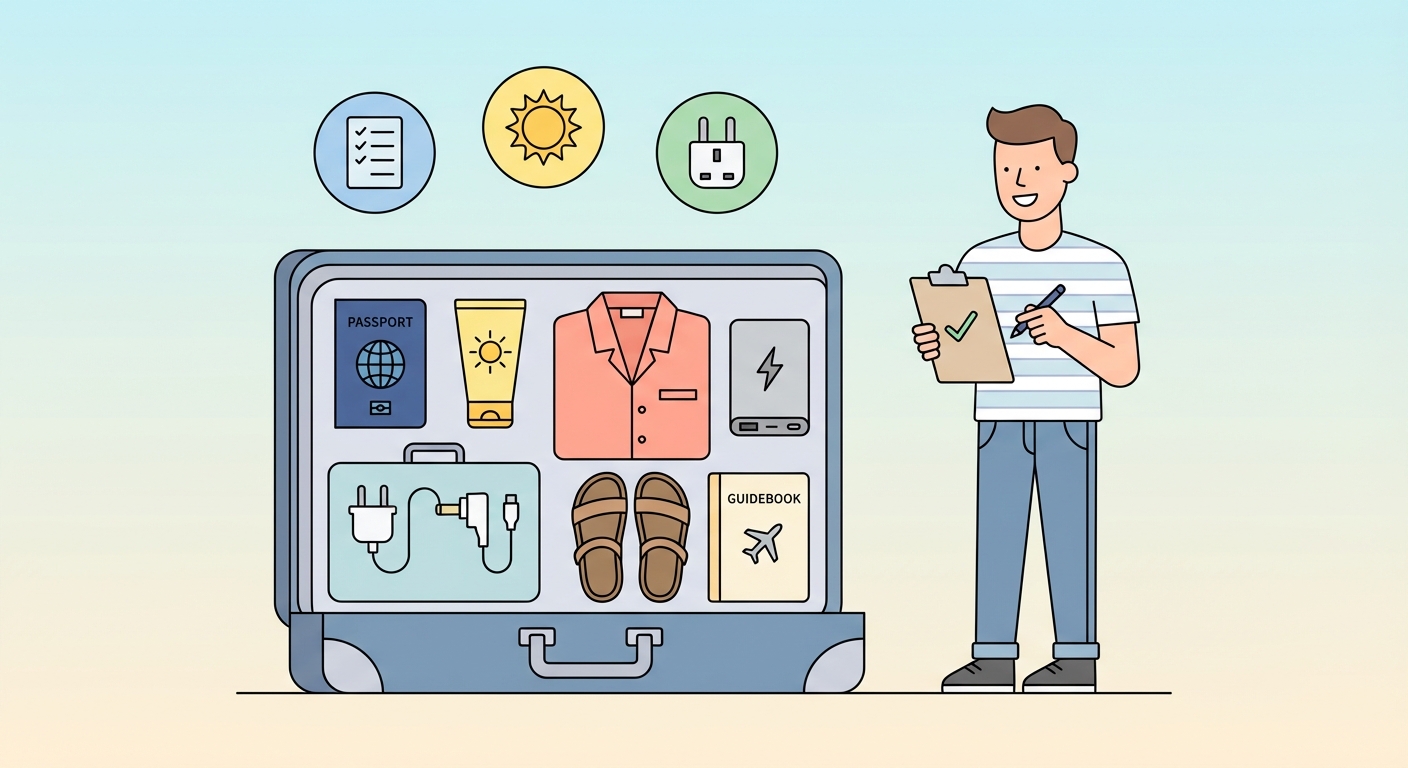
France's climate varies enormously — from Mediterranean warmth in Provence to alpine cold in Chamonix and Atlantic dampness in Brittany. Pack for your specific regions, but these universals always apply.

  • Smart casual clothing — The French dress with quiet elegance. While no strict dress codes exist in most places, looking put-together gets better service in restaurants and shops.
  • Comfortable walking shoes — Parisian streets are cobblestoned; avoid stilettos and pack shoes that can handle both museums and outdoor markets without blisters.
  • A light scarf — Immediately useful in Paris: as an extra layer on cool evenings, a cover-up in churches, and frankly, it's just what Parisians do.
  • Reusable bag — French supermarkets charge for plastic bags. A fold-up tote is useful for markets, beach days and picnic supplies.
  • Cash in euros — Most of France is card-friendly, but smaller markets, rural cafés and some traditional boulangeries still prefer cash.
  • Your uPhone eSIM — Activates on Orange, SFR or Bouygues networks for reliable 4G/5G coverage in cities and excellent rural reach across all regions of France.

Frequently Asked Questions

Everything you need to know about your France eSIM

Possibly less well. B20 (800 MHz) is the primary coverage band used by all French operators for rural and indoor LTE. If your phone lacks B20, you may experience weaker reception and slower data in the countryside or inside buildings compared to a device that supports it.

The eSIM connects to available networks automatically. Orange decommissioned its 2G and 3G networks as of 2026, so if your device lands on Orange and does not support 4G or 5G on its bands, you will have no service. Other operators still operate older networks.

This eSIM is designed for France only. Coverage does not extend to Monaco, Corsica, or neighboring countries unless specified. Corsica is part of France, but check coverage details. For multi-country trips, consider a regional plan that includes those destinations.

5G is available if your device supports the bands used by French operators. Orange uses n1, n3, n7, n20, n28, and n78. SFR and Bouygues use n1, n28, and n78. Free uses n28 and n78. Check your phone’s 5G band compatibility, especially n28 and n78, as they are common across all operators.

No. eSIMs for France purchased from this service do not require in-person ID checks or government registration. Activation is remote and does not involve French SIM registration laws that apply to physical SIMs from some local shops.

Use 1 GB for a short light-use trip, 3 GB for a longer stay with regular maps and messaging, or compare plans of 10 GB and above for streaming, video calls or work use.

Use ARCEP's Mon réseau mobile map to compare operator coverage and service-quality information for your accommodation, destinations and transport routes. Then confirm the network details for the selected eSIM product.

The start rule is product-specific. Review the selected plan details before installing it so you know whether any action is required before arrival.
24/7 Support

Need help? We're here for you.

Questions before or during your trip — our support team is always available via live chat and email. Typical response time under 2 minutes.

Chat with us
uPhone customer support