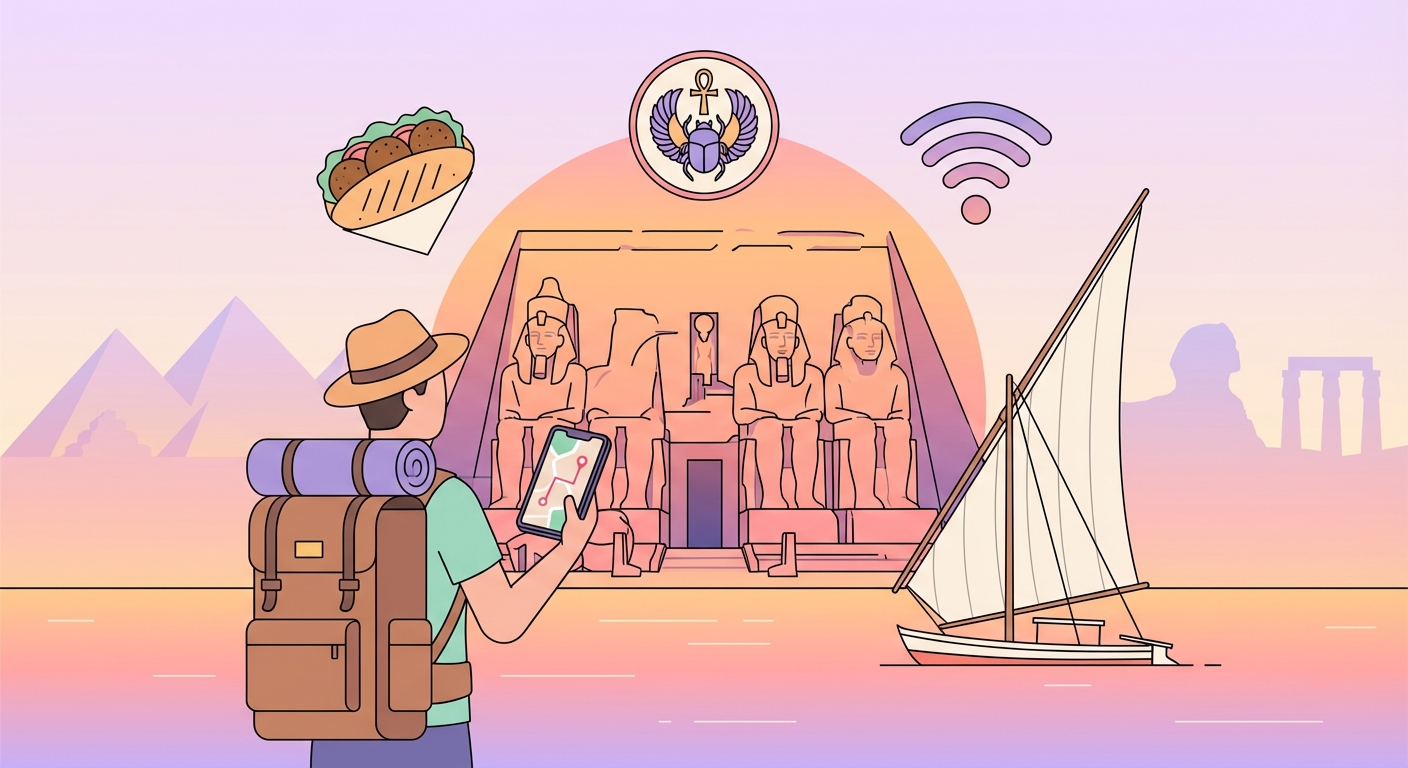
Egypt offers exceptional value for travellers who plan smartly. The key is understanding where costs are genuinely low and where spending a little extra transforms the experience. This guide takes a route-first approach, covering the classic Cairo–Luxor–Aswan–Red Sea circuit, and breaks down exactly what you can expect to pay for accommodation, food, transport, and attractions. All prices are in US dollars and reflect typical 2026 rates.
Accommodation: Beds from $8 to $60
Budget hotels and hostels in Cairo and Luxor start at around $8–$15 per night for a basic private room with a fan and shared bathroom. In Aswan and Hurghada, similar rooms cost $10–$20. Mid-range hotels with air-conditioning, private bathroom, and breakfast run $25–$50. For a significant upgrade, a four-star hotel will be $50–$80. A useful trade-off: pay $30–$40 in Luxor or Aswan for a Nile-view room rather than a windowless interior room – the difference in comfort and atmosphere is substantial. Dorm beds are rare outside hostels in Cairo; most budget accommodation is private rooms in small hotels. Always inspect the room first and confirm the price includes hot water, towels, and toilet paper.
Food: Street Eats to Sit-Down Meals
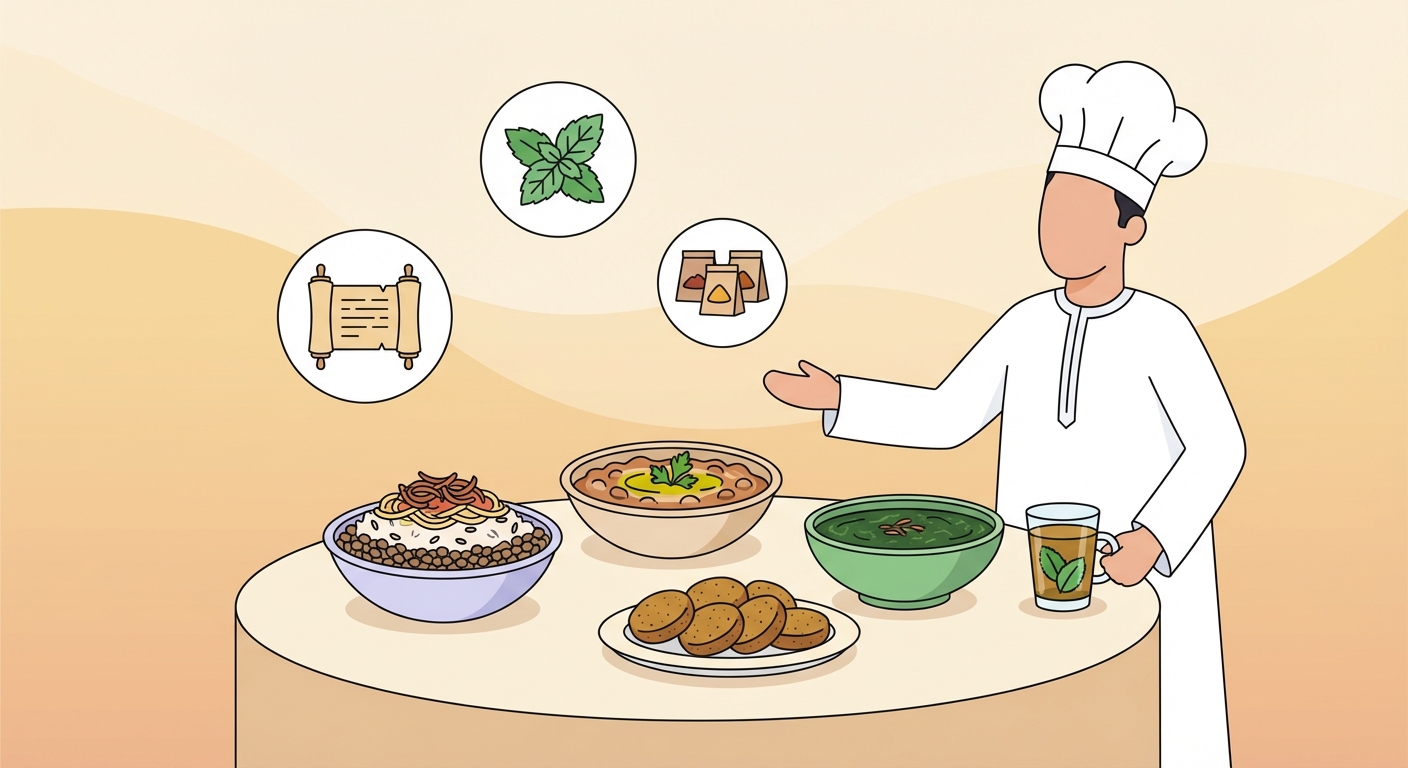
Street food is cheap and filling. A ful medames (fava bean paste) sandwich or a taameya (falafel) sandwich costs $0.30–$0.60. A koshari plate, Egypt’s national comfort dish of rice, lentils, pasta, and tomato sauce, runs $0.50–$1.50. For a sit-down meal with grilled meat or fish, budget $5–$10. In touristy areas of Luxor and Hurghada, prices double. Avoid restaurants with touts outside; instead walk a block or two away. Bottled water is $0.30–$0.50 per 1.5 litre; always check the seal is intact. A useful caution: tap water is not safe for drinking, even in hotels.
Local Transport: Cheap, Chaotic, and Essential
Within cities, minibuses (microbuses) cost $0.10–$0.30 per ride. They follow fixed routes but stop anywhere; you pay the driver directly. For short trips in Cairo, the metro costs $0.15 per ride and is the most efficient option. Taxis and ride-hailing apps: Uber and Careem work well in Cairo, Alexandria, and Hurghada. A typical 15-minute ride costs $2–$5. In Luxor and Aswan, local taxis (often white or black-and-white) can be hailed on the street; always agree on the fare before getting in. A short ride should be $1–$3. For longer distances, the sleeper train Cairo–Luxor–Aswan costs $25–$40 for a first-class bunk (book in advance through the operator). The overnight bus is cheaper at $8–$15 but less comfortable. For the Red Sea, a bus from Cairo to Hurghada runs $10–$15.
Attractions: Pay for the Big Three
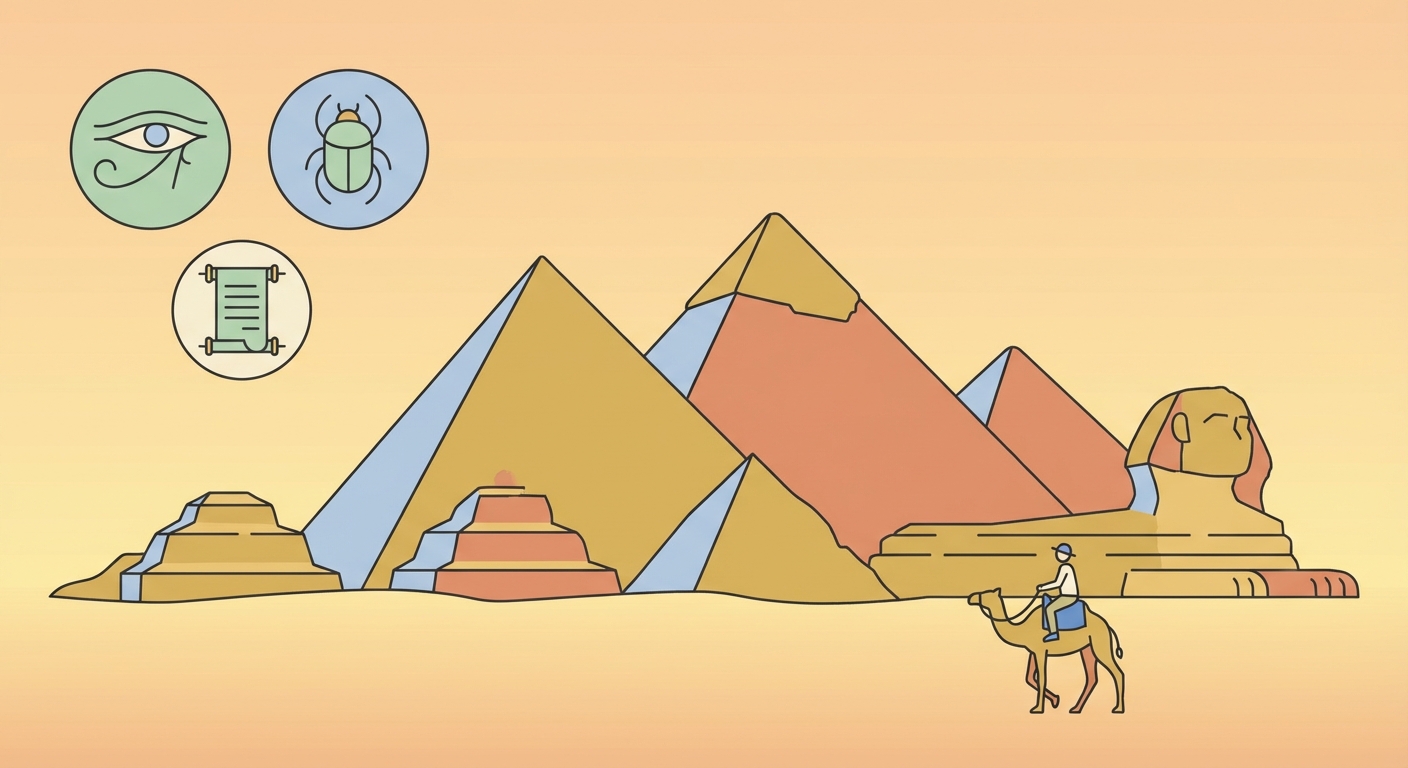
Entry fees for major sites are reasonable. The Giza Pyramids complex costs about $15; the Grand Egyptian Museum (opening fully in 2025) is expected to be $20–$25. Karnak Temple in Luxor is $10; Valley of the Kings is $15 and includes entry to three tombs. Abu Simbel is $20. A useful tip: buy a student ID card if you are eligible – most sites offer a 50% discount. For the Red Sea, entry to public beaches is free; snorkelling gear rental costs $5–$10 per day. Haggling is expected at souvenir stalls and for camel rides – start at a third of the asking price.
Payment Habits: Cash Still Rules
Despite the growth of cards, cash is king in Egypt. Most small shops, street vendors, and taxis accept only Egyptian pounds (EGP). ATMs are common in cities, but they sometimes run out of cash. Carry a mix of small and large bills. Cards are accepted at mid-range and high-end hotels, large restaurants, and some tour operators. A caution: many ATMs charge a foreign-transaction fee of $2–$5; check with your bank before departure. For mobile data, arrange an Egypt eSIM before you fly – it costs around $10–$15 for 5–10 GB and avoids the hassle of buying a physical SIM at the airport.
Tipping: A Small but Important Habit
Tipping is ingrained in Egyptian culture. A small tip (بخشيش – baksheesh) is expected for services that are often free elsewhere. For a toilet attendant, give $0.10–$0.20; for a hotel porter or luggage carrier, $0.50–$1; for a waiter in a mid-range restaurant, 5–10% of the bill if no service charge is added. Do not tip aggressively – a few coins are enough. A useful caution: some taxi drivers and guides will pressure you for a large tip; a polite but firm “no” is acceptable.
Daily Budget Bands
- Ultra-budget ($20–$30/day): Dorm or basic private room, street food, minibus travel, one major attraction every two days, no tours. Works for experienced backpackers but is tight.
- Comfortable budget ($40–$60/day): Private room with AC, mix of street food and sit-down meals, occasional taxi, one attraction per day, one guided tour per week. Best value for most travellers.
- Mid-range ($70–$100/day): Three-star hotel with breakfast, restaurant meals, ride-hailing apps, multiple attractions, private guide for a day, and a felucca ride. Relaxed and enjoyable.
- Splurge ($120+/day): Four-star hotel, Nile-view room, all meals in restaurants, private driver, multiple guided tours, and a hot-air balloon ride in Luxor ($80–$120).
Where Spending More Actually Helps
Some expenses are worth the upgrade. A private guide for a day at the Pyramids or Valley of the Kings ($30–$50) provides context and saves hours of confusion. A felucca sail on the Nile in Aswan ($10–$20 per hour for a private boat) is a serene experience that a group tour cannot match. An air-conditioned hotel room in summer (May–September) is not a luxury but a necessity. And a longer, more expensive Nile cruise (from $60/night) usually includes meals and excursions, saving money compared to booking separately. Conversely, skip the expensive Nile-view restaurants in central Cairo – the food is often mediocre and overpriced. Stick to koshari and street food for authentic, cheap meals.
Egypt rewards the traveller who plans a clear route, pays attention to small details, and knows when to push and when to hold back. With a daily budget of $40–$60, you can see the Pyramids, sail the Nile, snorkel in the Red Sea, and eat well without stress. The real cost is flexibility – cash on hand, patience with haggling, and a willingness to eat where locals eat. That is the budget traveller’s secret to Egypt.