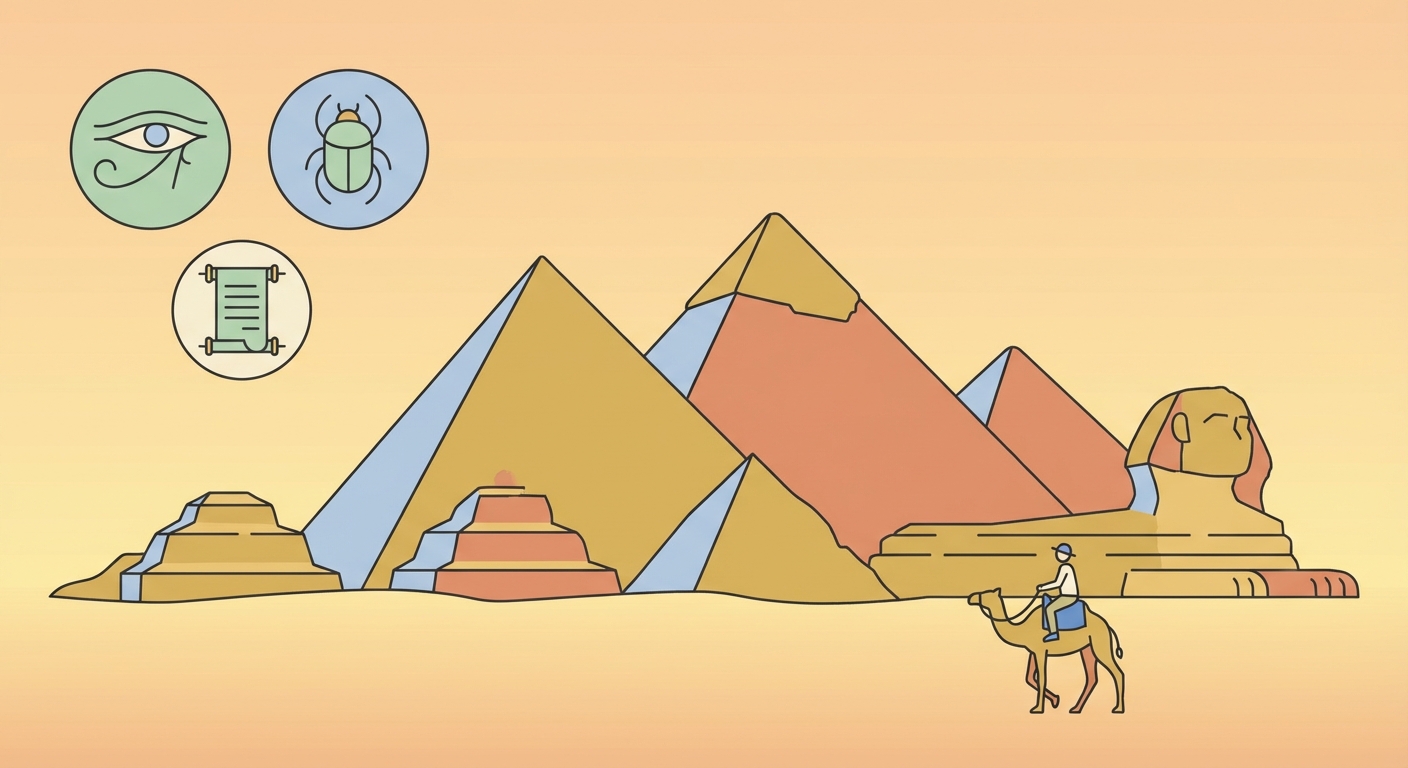
For a first visit to Egypt, the classic Cairo–Luxor–Aswan triangle remains the most rewarding route. It packs the Giza pyramids, the Egyptian Museum, the Valley of the Kings, and the temples of Karnak and Philae into one week without feeling rushed—provided you move efficiently between bases and skip the less essential stops. This itinerary assumes you arrive and depart from Cairo International Airport. It uses internal flights for the long southward leg and a Nile cruise for the northward return, a combination that saves time and lets you sleep while the ship sails.
How the route works
You will spend three nights in Cairo, then fly to Luxor for two nights, then sail to Aswan for one night, and finally fly back to Cairo for your departure. The cruise between Luxor and Aswan covers the major riverside temples while you eat, sleep, and unpack only once. If you prefer to avoid the cruise, you can take the train from Luxor to Aswan (about three hours) and stay in a hotel in each city, but you will lose the convenience of moving your luggage automatically and the chance to see the sunset over the Nile from a deck.
Day 1: Arrive in Cairo
Land at Cairo International. Arrange an airport transfer or take an official taxi to your hotel in Giza or Zamalek. Giza puts you closer to the pyramids for the next morning; Zamalek is quieter and has better restaurant choices. Settle in, and if you have energy, walk along the Nile corniche or visit the nearby Zamalek district for a first taste of Cairo’s street life. Do not attempt a museum visit on arrival day—jet lag and airport queues make it a waste of time.
Day 2: Giza pyramids and the Grand Egyptian Museum
Start early, ideally by 7:00 AM, at the Giza Plateau. The pyramids and the Sphinx are the main draw; you can enter the Great Pyramid (tickets are limited, so buy online in advance) or simply walk the plateau. By 10:00 AM the crowds and heat intensify. From Giza, take a taxi to the Grand Egyptian Museum (GEM). At the time of writing, the GEM is partially open, but the main galleries and the Tutankhamun collection are accessible. Allow three hours. In the evening, consider a sound-and-light show at Giza or a dinner cruise on the Nile; both are touristy but enjoyable on a first visit.
Day 3: Coptic Cairo and Khan el-Khalili
This day is slower by design. Visit the Hanging Church, the Ben Ezra Synagogue, and the Amr ibn al-As mosque in Coptic Cairo. Then take a taxi to Khan el-Khalili bazaar. The souk is chaotic but atmospheric; bargain firmly for souvenirs. Do not accept unsolicited guides. If you want a break from the crowds, walk to the nearby Al-Azhar Park for a panoramic view of the old city. In the evening, pack for the next day’s flight.
Day 4: Fly to Luxor, West Bank
Take a morning flight from Cairo to Luxor (about one hour). Check into a hotel on the East Bank or in a riverside resort on the West Bank; the West Bank is quieter and closer to the tombs. After lunch, visit the Valley of the Kings. Buy your ticket for three tombs (the standard entry) and add the tomb of Ramesses VI or Merenptah if you want more detail. The tombs close by 5:00 PM, so arrive by 1:00 PM at the latest. Afterwards, drive past the Colossi of Memnon (a quick photo stop) and see the Temple of Hatshepsut. This day is full, but it is the most efficient way to cover the West Bank without a second trip.
Day 5: Karnak Temple, then board the cruise
In the morning, visit Karnak Temple, the largest religious complex in Egypt. Allow two hours. Walk through the Great Hypostyle Hall and the sacred lake. After lunch, board your Nile cruise. Most cruises depart Luxor in the late afternoon. You will sail overnight toward Esna. The cruise includes dinner and entertainment. Do not expect luxury on a budget cruise; standard cabins are compact but clean. Confirm that your cruise includes a stop at Edfu and Kom Ombo.
Day 6: Edfu, Kom Ombo, and arrive in Aswan
Early morning, the cruise reaches Edfu. You will take a horse-drawn carriage (calèche) from the dock to the Temple of Horus, one of the best-preserved Ptolemaic temples. The carriage ride is part of the experience, but agree on the price in advance. After Edfu, the ship sails to Kom Ombo, arriving around midday. The temple there is unusual because it is dedicated to two gods, Sobek and Horus. By late afternoon the cruise arrives in Aswan. Check into your hotel or stay aboard the cruise if it remains docked overnight. In the evening, walk the Aswan Corniche and have dinner at a restaurant overlooking the Nile.
Day 7: Philae Temple and return to Cairo
Take a motorboat from the Aswan dock to Agilkia Island to see Philae Temple, dedicated to the goddess Isis. The boat ride takes about 30 minutes each way; allow two hours on the island. Return to Aswan, then fly back to Cairo. Your flight home likely departs late in the evening, so you have time for last-minute shopping or a final meal in Cairo. If your flight is very early the next day, stay overnight near the airport and skip the city.
When a slower alternative makes more sense
If you dislike early mornings or prefer to linger at sites, drop either the West Bank day or the Edfu stop. Instead, spend two nights in Luxor and two in Aswan, taking the train between them. You will lose the cruise experience but gain more time at the Valley of the Kings and the chance to visit Abu Simbel (a full-day trip from Aswan). That swap requires eight or nine days, so on a strict seven-day schedule you must choose between the cruise and Abu Simbel. Most first-timers prefer the cruise for its variety.
Practical notes for this itinerary
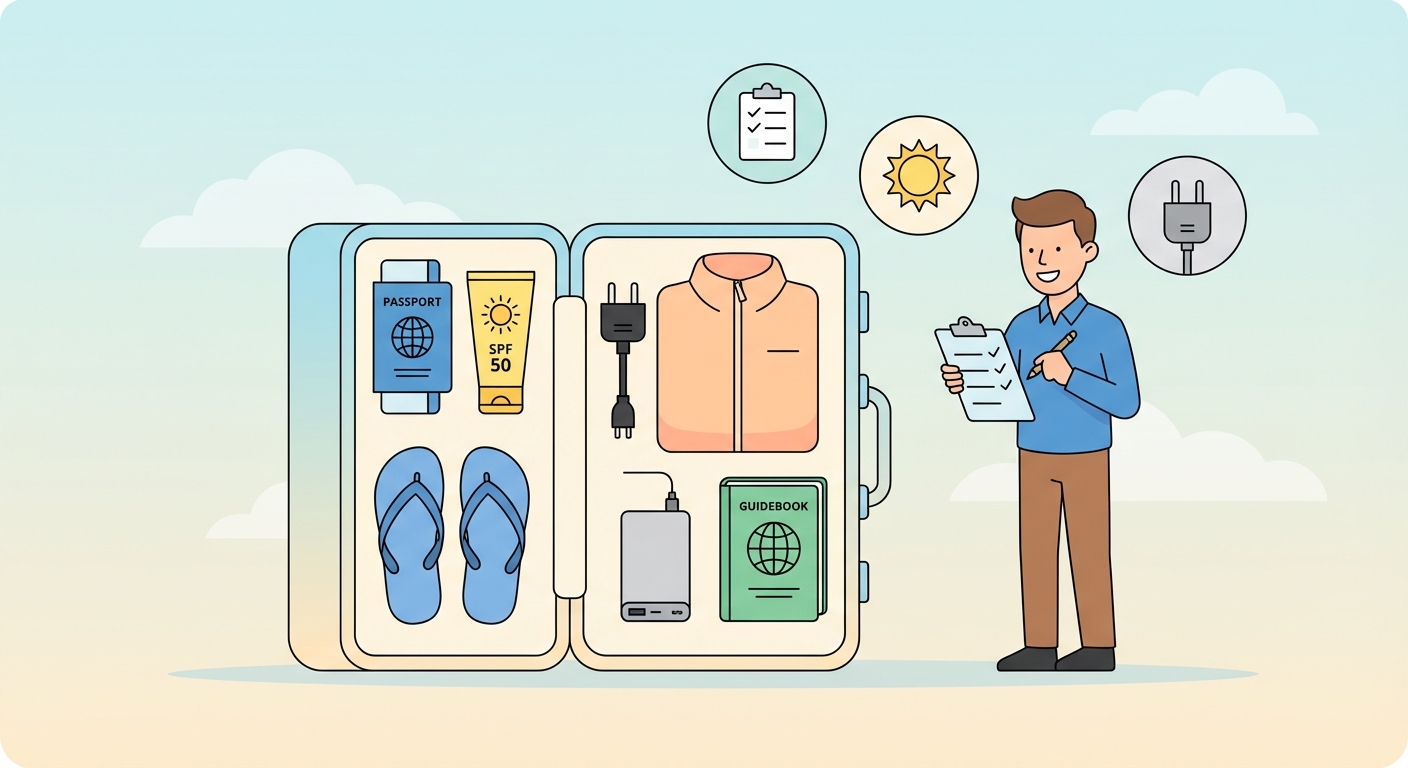
- Mobile data: Buy an Egypt eSIM before you leave or at the Cairo airport arrivals hall. It costs about US$10–15 for 10 GB and saves you hunting for SIM cards in Luxor or Aswan.
- Water and sun protection: Carry a reusable bottle and buy bottled water everywhere. Wear a wide-brimmed hat and use sunscreen even in October.
- Dress code: Cover shoulders and knees when entering mosques, churches, and temples. Light linen trousers are ideal.
- Tickets and guides: Book pyramid entry and Valley of the Kings tickets online in advance. Official guides at temples cost about US$20–30 per hour; they can help you skip lines but are not essential.
- Transport: Use Uber in Cairo and Luxor for fixed fares. In Aswan, negotiate taxi fares before starting the trip.
Trade-offs to accept
This itinerary skips Alexandria, the Red Sea resorts, and the Western Desert oases. Those are better saved for a second trip. It also means you see Abu Simbel only if you add a day. The trade-off is a manageable pace that lets you absorb the main monuments without burnout. If you try to add more, you will spend too much time in transit and too little time enjoying what you came to see.